


Soft Tissue Injury Compensation Calculator UK

Legal Writer
Soft tissue injury compensation calculators will help you estimate how much compensation you may be entitled to if you have been injured in the UK. To use a calculator, input your personal information, describe your injury, and enter the amount of money you’ve already spent on medical expenditures and loss of earnings due to your accident. The tool will then estimate how much compensation you might receive in serious injury claims. It is crucial to note that the calculator is only an estimate, and actually, how much compensation for soft tissue injury you receive will depend on the specific circumstances of your case.
Read on to learn more about soft tissue injury compensation.
Table of Contents

Get In Touch With Your Local Office:
With local knowledge and a national network of experts, we have the experience you can count on.
What Are The Causes Of Soft Tissue Injuries
You can have soft tissue injuries due to various reasons. Accidents such as slips, trips, and falls are common causes, and they can strain or tear muscles, ligaments, and tendons.
Vehicle accidents and other forms of trauma can result in soft tissue injuries due to the sudden impact on the body. These injuries can vary in severity; some might only take a week or two to recover, while others might take months or even years.
You may ask, Can Soft Tissue Damage Be Permanent? The answer is yes; they can be permanent if you do not provide adequate treatment and care at the start.
Soft Tissue Injury Compensation Calculator
| Injury | Notes | Damages |
|---|---|---|
| Multiple soft tissue injuries + special damages | Serious soft-tissue injuries plus additional financial losses such as treatment costs, lost earnings, and paid care/support. | Up to £150,000+ |
| Back injuries | Severe (iii): A back soft-tissue injury that develops into long-term/chronic problems, with ongoing disability despite treatment. | £47,320 to £85,100. |
| Back injuries | Moderate (ii): A back soft-tissue injury that significantly worsens or speeds up an existing condition over a prolonged period. | £15,260 to £33,880. |
| Ankle injuries | Very severe: A transmalleolar ankle fracture alongside substantial damage to surrounding soft tissues. | £61,090 to £85,070. |
| Neck injuries | Severe (iii): Major neck soft-tissue damage, sometimes involving tendon rupture, with lasting/chronic symptoms. | £55,500 to £68,330. |
| Neck injuries | Moderate (i): Combined soft-tissue injuries affecting both the neck and the back. | £30,500 to £46,970. |
| Hand injuries | Moderate: Hand trauma, including crush-type injuries, penetrating injuries, and other soft-tissue damage. | £6,910 to £16,200. |
| Shoulder injuries | Moderate: Shoulder soft-tissue injury with lasting, noticeable symptoms after two years. | £9,630 to £15,580. |
| Wrist injuries | A wrist soft-tissue injury that takes longer than 12 months to recover. | £7,420 to £12,630 |
Possible Causes Of Soft Tissue Injury:
Soft tissue injuries can happen because of many different reasons in the UK; Some of the most common reasons are as follows.
Workplace Accidents:
Workplace accidents are a common cause of soft tissue injuries in the UK. These accidents can happen in a wide range of workplaces and businesses and affect people of all ages and jobs. One of the main reasons soft tissue injuries happen at work is how people lift and move heavy items. When employees don’t know how to lift or carry things correctly, it can put too much pressure on their muscles and cause them to strain or sprain.
Another thing that can cause soft tissue injuries at work is repetitive tasks. Jobs involving doing the same thing over and over again, like typing on a computer or working on an assembly line, can lead to overuse injuries in the muscles and tendons. This can cause problems like carpal tunnel syndrome or arthritis over time.
Slips, trips, and falls at work are common causes of soft tissue injuries. Wet or uneven floors, cluttered walks, or workspaces that aren’t looked after well can make someone more likely to fall and hurt their muscles, tendons, or ligaments.
Due to the physical nature of some jobs and businesses, there is a higher risk of soft tissue injuries. Because of how hard their jobs are, construction workers, warehouse workers, healthcare workers, and manual labourers are more likely to get these kinds of injuries.
If you have suffered a soft tissue injury in a workplace accident, then you may be eligible to make accident claims. However, if you want to make a claim, then take note of the time limits for making accident claims. The time limit in the UK is usually three years from the date of the accident.
Sports Accidents:
In the UK, sports accidents are also a common cause of soft tissue injuries. When people do sports or other physical activities, they might accidentally push themselves too hard or collide with other people. These things can cause their muscles and joints to get strained or sprained.
There are many sports where crashes can happen, like football, rugby, tennis, and running. During these activities, sudden movements, falls, or impacts can put a lot of stress on the body’s soft tissues, which can lead to injuries.
It’s important to warm up before physical activities and to wear the proper protection gear, like helmets or pads, to avoid soft tissue injuries from sports. If you get a soft-tissue injury while playing sports, you must stop immediately and allow the affected area to rest. Putting ice on and applying pressure can also help reduce the pain and swelling. If the injury is severe or doesn’t get better with treatment at home, see a doctor for an accurate diagnosis and treatment plan.
Whiplash:
Whiplash is a common injury in the UK that often happens in car crashes. It occurs when the head quickly jerks forward and backwards, putting stress on the muscles and ligaments in the neck. This sudden movement can hurt soft tissues, cause pain and stiffness, and reduce the mobility of the neck.
Whiplash often happens in a rear-end car accident, but it can also happen in other types of accidents, like sports injuries or falls. The forceful movement of the head can cause the neck’s delicate structures to stretch beyond their usual range, which can cause whiplash symptoms.
Whiplash symptoms may not always show up immediately after an accident. Sometimes they take a few hours or even days to show up. Some of the most common symptoms are neck pain, headaches, shoulder pain, dizziness, and trouble focusing. People may sometimes feel pain or numbness in their arms or hands.
If you have suffered a whiplash injury because of someone else’s fault, then you may be eligible to make a claim for compensation. The whiplash payouts or amount of compensation you will receive will depend on the severity of your injury, its impact on your life, and how long it will take for you to recover.
Your soft tissue injury car accident settlement UK will include general damages, such as pain and suffering, and also include special damages, such as financial losses, loss of earnings, and expected treatment costs.
Public Place Accidents:
Accidents in public areas are a major cause of soft tissue injuries in the UK. Parks, sidewalks, shopping centres, and leisure areas are all public places. Accidents like these can happen for several reasons, such as wet or slick surfaces, uneven pavement, or buildings that aren’t well taken care of. When someone trips, slips, or falls in a public place, they can hurt their muscles, tendons, or ligaments.
Accidents in public places can also happen when someone collides with some object, like poorly placed barriers or low-hanging obstacles. When these kinds of accidents happen, the force of the impact can hurt the body’s muscles and ligaments, causing pain and other problems.
Local governments and property owners must keep public places in good shape to prevent these accidents. Accidents can be less likely if there are regular checks, quick repairs of damage, and clear signs. People can also be cautious and stay aware of their surroundings to avoid possible dangers when walking in public places.
If someone hurts their soft tissues in public, they should report it to the authorities or property owners. It’s essential to get medical attention as soon as possible so you can find out how bad the injury is and get the proper treatment. Resting the affected area, using ice or heat packs, and doing what the doctor tells you to do can all help in the healing process.
If a property owner was careless and caused the accident, legal action could be taken to get compensation for the damage and any costs that came with it.
If you have experienced a public place accident and want to make a personal injury compensation claim, contact Scottish personal injury lawyers for free legal advice.
Soft Tissue Injury Compensation Calculator Infographic
Common Symptoms Of Soft Tissue Injury
Soft-tissue injuries can be difficult to identify because they don’t always show on X-rays. However, knowing their symptoms can help you identify if you have suffered a soft tissue injury; here are some common symptoms of soft tissue injuries.
1. Pain:
Pain is the most common and obvious sign of a soft tissue injury. When you hurt soft tissue, like when you pull or sprain it, the affected area can hurt and feel uncomfortable. The pain can range from mildly uncomfortable to very painful, depending on how bad the injury is.
The pain may stay where the injury happened, like a muscle or joint or spread to other body parts. For instance, if you break your ankle, you might feel pain in your ankle and the muscles and tendons around it.
The pain can get worse when you move or put weight on an area with a soft tissue injury; you might find it hard to do certain things or move in specific ways without feeling pain. It is often recommended to give the injured area time to rest and avoid doing things that worsen the pain to speed up the healing process.
2. Swelling:
Swelling is another common symptom of a soft tissue injury. The area where soft tissue injury happened, such as a strain or sprain, may swell up. When you are injured, your body’s natural reaction is to send more blood to the affected area. This makes fluid and white blood cells gather around the damage, which causes it to swell and become inflame.
Because of the swelling, the affected area may look bigger than normal and feel tender to the touch. Because the swelling adds pressure, it might be hard to move the affected body part without pain. For example, if you have a broken wrist, your wrist might look swollen and feel puffy.
3. Bruising:
When you get a soft tissue injury like a strain or sprain, the impact or trauma may break small blood vessels under the skin. This lets blood leak into the tissues surrounding the wound, making it look like a bruise.
Bruises usually look like purple, blue, or black spots on the skin. The colour may change over time as the body breaks down the blood. At first, the bruise might be painful and hurt when you touch it. As the bruise heals, it may turn green, yellow, or brown before finally going away.
Bruises can range in size and severity, depending on the degree of the injury. For example, a small strain might only cause a small bruise, but a bigger blow or trauma might cause a bigger bruise that covers a larger area.
4. Tingling or Numbness:
Tingling or numbness is also a possible symptom of a soft tissue injury. A soft tissue injury, like a strain or sprain, can sometimes affect the nerves in the affected area. This can make you feel like your skin is tingly or going numb.
People often compare tingling to a “pins and needles” feeling, where you feel pricking or buzzing in the affected area. On the other hand, numbness is when you have less or no feeling in the affected part of your body.
Tingling or stiffness can happen along with pain, swelling, and a limited range of motion. The severity and length of the feelings depend on how bad the injury is and how it affects the nerves.
It’s important to remember that tingling or numbness may not always be a sign of how bad the injury is. Even slight damage to soft tissue can irritate a nerve and cause these feelings.
5. Difficulty Weight Bearing:
People with soft tissue injuries, especially in their legs, often have difficulty bearing weight. When you have an injury to soft tissue, like a sprained ankle or knee, it can be hard or painful to put weight on the injured foot or leg.
When injured ligaments or muscles can’t support the body’s weight as well as they usually would, this makes it hard to bear weight. This can make standing, walking, or putting weight on the leg painful and uncomfortable.
For example, if you have a twisted ankle, putting weight on that foot might be hard, making it hard to walk without pain. In more severe cases, a person may be unable to put any weight on the injured leg.
Types Of Soft Tissue Injuries:
Several kinds of soft tissue injuries can happen due to several different reasons; here are some common ones:
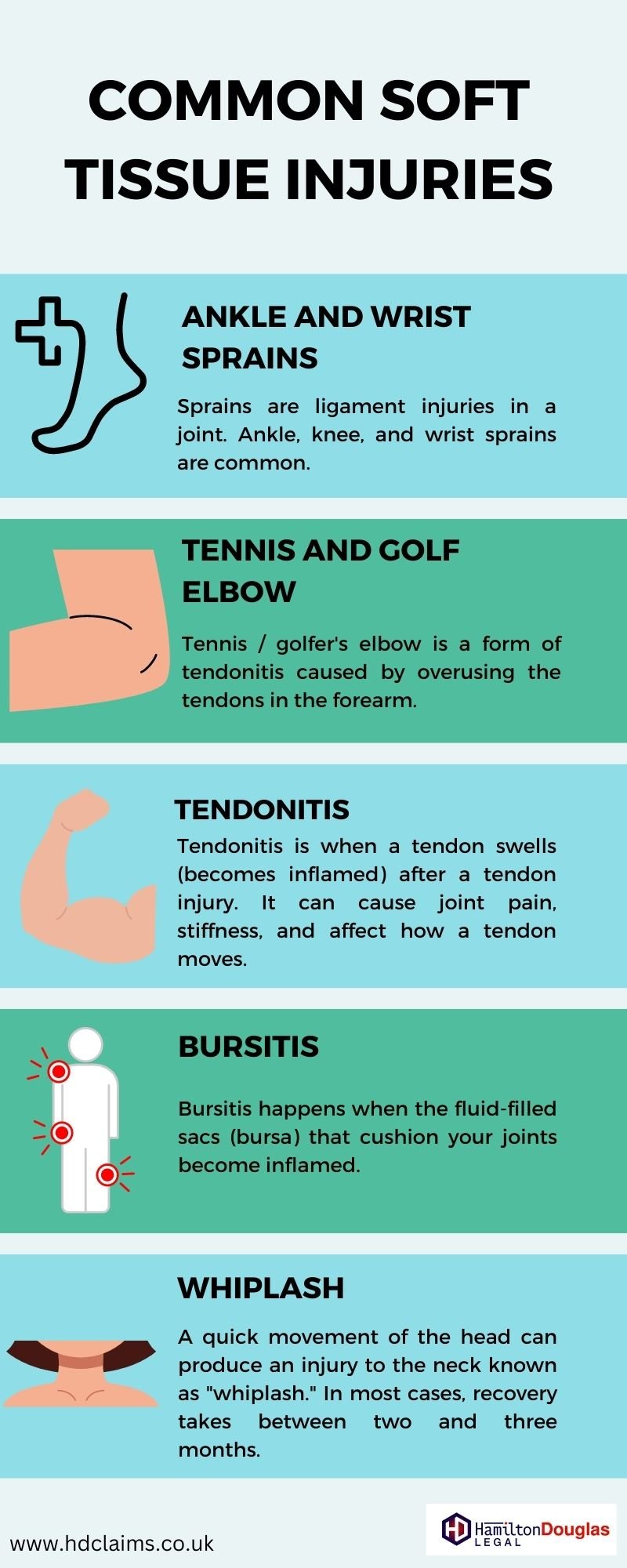
- Strains: When muscles or tendons are pulled or torn, this can cause strain. They often happen because of sudden moves, overwork, or not knowing how to lift heavy weights properly. Strains can make the affected area hurt, swell up, and make it hard to move.
- Sprains: Sprains happen when muscles are stretched or torn, usually due to sudden twists and impacts. Ankle sprains are a common example; they often happen in sports or accidents. Sprains can hurt, cause swelling and bruising, and make it hard to bear weight.
- Contusions: Contusions, also called bruises, happen when an impact breaks small blood vessels under the skin, causing blood to pool and change the colour of the skin. Contusions can be painful and change skin colour as your body reabsorbs the blood.
- Tendinitis: Tendinitis is inflammation of a muscle, which is often caused by overuse or doing the same thing repeatedly. Shoulders, elbows, and knees are the most common places where this happens. Tendinitis can cause pain, swelling, and limit the range of motion.
- Bursitis: Inflammation of the bursae, which are small sacs that protect and lubricate joints. It can come from doing the same thing repeatedly or putting pressure on the joints. Bursitis can cause pain, stiffness, and the inability to move around.
DEDICATED CLAIMS ADVISORS
Our dedicated claims advisors are always available to offer free legal advice.
100% NO WIN NO FEE CLAIMS
All our claims are processed on a No Win No Fee basis; you pay nothing if you lose.

MILLIONS SECURED IN DAMAGES
To date, we have secured millions in damages.
THOUSANDS OF SATISFIED CLIENTS
To date, we have helped thousands of clients recover compensation and continue to do so.
What Is The Average Payout For Soft Tissue Injury UK?
In the UK, the average payout for soft tissue injuries varies based on the severity and location of the injury; here are some figures on average compensation for soft tissue injury:
Head, Neck & Neurological Injuries
Injuries affecting the brain, skull, or spinal cord fall under this category and are often the most severe.
Brain Injury:
- Very Severe Brain Damage: £220,000 – £315,000
- Moderate Brain Damage: £170,000 – £220,000
- Minor Brain Damage (Moderate Cognitive Deficit): £118,000 – £171,000
- Minor Head Injury (Full Recovery): £1,800 – £10,000
Neck Injury:
- Severe Injury with Permanent Limitation/Pain: £10,700 – £19,500
- Whiplash with Ongoing Complications: £6,200 – £10,700
- Whiplash with ~2 Year Recovery: £3,400 – £6,200
- Whiplash with Recovery Under 1 Year: Up to £3,100
Post-Traumatic Stress Disorder (PTSD) & Psychological Injury:
- Severe, Permanent Psychological Damage: Up to £90,000
- Moderate, Treatable Psychological Damage: £1,200 – £4,600
- Minor, Temporary Anxiety/Adjustment Disorder: £1,200 – £4,600
Facial & Sensory Injuries:
These injuries can have profound impacts on appearance, communication, and perception.
Facial Disfigurement & Scarring:
- Most Severe Scarring (Psychological Impact): £38,000 – £76,000
- Significant Scarring (Permanent Marking): £14,000 – £38,000
- Notable Scarring (Cosmetically Detrimental): £6,200 – £14,000
- Minor Scarring: £2,400 – £6,200
- Trivial, Superficial Scarring: £1,150 – £2,400
Eye Injury & Vision Loss:
- Total Blindness: £210,000
- Loss of Sight in One Eye with Reduced Vision in the Other: £75,000 – £140,000
- Total Loss of One Eye: £42,500 – £51,500
- Minor Injury with Full Recovery: £1,800 – £3,100
Ear Injury & Hearing Loss:
- Total Deafness: £71,000 – £85,500
- Total Loss of Hearing in One Ear: £21,000 – £31,000
- Partial Hearing Loss and/or Tinnitus: Up to £35,500
Nose Injury:
- Serious Fracture with Permanent Breathing Difficulty: £28,000 – £41,000
- Fractured Nose or Serious Damage Requiring Surgery: £8,500 – £28,000
- Simple Fracture with Full Recovery: £1,800 – £8,500
Dental & Jaw Injuries:
- Loss/Serious Damage to Multiple Front Teeth: Up to £8,300
- Loss/Serious Damage to a Single Back Tooth: Up to £1,350 per tooth
- Fractured Jaw with Permanent Consequences: £28,000 – £41,000
- Dislocated or Simple Fractured Jaw: £5,200 – £28,000
Upper Body & Torso Injuries:
Injuries to the core body can be debilitating, affecting mobility and major bodily functions.
Back & Spinal Injury:
- Quadriplegia (Tetraplegia): £252,000 – £315,000
- Paraplegia: £170,000 – £221,000
- Severe Injury with Impaired Function/Organs: £71,000 – £125,000
- Serious Disc/Vertebrae Injury with Chronic Pain: £30,000 – £54,000
- Moderate Soft Tissue/ligament Injury: £9,700 – £21,600
- Minor Strain with Full Recovery: Up to £9,700
Chest & Abdominal Injury:
- Serious Damage to Internal Organs: £21,000 – £37,000
- Crush Injury, Flail Chest: £16,000 – £21,000
- Moderate Injury (Single Wound, No Organ Damage): £8,500 – £14,000
- Minor Injury (Rib Fractures, Soft Tissue): Up to £2,700
Shoulder Injury:
- Severe Brachial Plexus Damage: £15,000 – £37,500
- Fracture of Clavicle (Collarbone): £4,000 – £9,500
- Soft Tissue Injury with Recovery <2 Years: £6,200
Arm & Elbow Injury:
- Loss of Both Arms: Up to £234,000
- Loss of a Single Arm: £92,000
- Amputation Above Elbow: £85,500
- Severe Elbow Injury with Loss of Function: Up to £46,700
- Fractures of the Arm: £5,200 – £15,000
- Moderate/Simple Elbow Injury: Up to £8,000
Lower Body & Limb Injuries:
These injuries critically impact mobility, independence, and quality of life.
Hip & Pelvic Injury:
- Extensive Pelvic Fracture: £30,500 – £102,000
- Significant Hip Injury with Permanent Disability: £29,700 – £102,000
- Moderate Injury with Minor Disability: £9,800 – £30,500
- Minor Injury with Good Recovery: Up to £6,000
Leg & Knee Injury:
- Severe Leg Fracture with Lasting Disability: Up to £21,500
- Simple Leg Fracture with Good Recovery: Up to £10,300
- Serious Knee Injury with Chronic Pain/Weakness: £21,500 – £42,000
- Moderate Knee Injury (Dislocation, Torn Cartilage): Up to £10,300
- Minor Knee Injury (Sprain, Laceration): Up to £4,700
Ankle Injury:
- Severe Fracture/Ligament Damage with Disability: Up to £10,700
- Moderate Injury (Sprains, Minor Fractures): Up to £4,100
Foot Injury:
- Severe Fracture with Permanent Difficulty: Up to £10,300
- Moderate Injury (Ruptured Ligaments, Metatarsal): £5,400 – £10,300
- Minor Injury (Sprains): Up to £5,400
Toe Injury:
- Amputation of Great/Big Toe: Up to £24,400
- Amputation of Other Toes: £7,500 – £10,700
- Fractures with Full Recovery: Up to £7,500
Hand & Wrist Injuries:
Injuries to the hands and wrists can significantly impair the ability to work and perform daily tasks.
Hand Injury:
- Serious Injury with Permanent Disability/Reduced Capacity: £22,600 – £48,300
- Loss of Fingers Causing Deformity/Impaired Grip: Up to £27,700
- Minor Injury with Full Functional Recovery: £720 – £3,400
Wrist Injury:
- Severe Injury with Permanent Disability (e.g., Complex Fracture): Up to £46,700
- Uncomplicated Fracture with Full Recovery: Up to £8,000
- Minor Soft Tissue Injury (Sprain): Up to £3,700
Finger & Thumb Injury:
- Loss of Thumb: £27,700 – £42,700
- Amputation/Severe Fracture of Index/Middle Finger: Up to £19,500
- Fracture or Dislocation of Other Fingers: Up to £3,700
Important Note on Compensation Awards:
The figures provided are guideline ranges. The final settlement within any category depends on numerous individual factors, including:
- The severity and permanence of the disability.
- The impact on employment and earning capacity.
- The level of pain, suffering, and loss of amenity.
- Required medical treatments, rehabilitation, and future care costs.
- Associated psychological trauma.
- The individual’s age and personal circumstances.
For a precise assessment of a potential claim, it is essential to consult a qualified personal injury solicitor.
It’s important to note that these numbers are averages and can change based on the specific details of each case, especially with back injury settlements. The compensation amount is based on evidence, on how the injury affects the person’s life and other important things. Older individuals usually get more compensation for soft tissue injuries because it takes them longer to recover.
The Evidence You Would Need For Your Soft Tissue Injury Claim?
First, you would need to prove that your target was at fault for the accident, and you indeed suffered a soft tissue injury because of that accident – for that, you would need the following evidence.
CCTV Footage:
One of the best pieces of evidence for your soft tissue injury claim comes from CCTV footage. It can show what took place, consequently helping you find out who the responsible party is. Should the accident occur in a public space, like a store or street, there’s a good chance it was recorded.
You should obtain this video as soon as possible since many companies and authorities only store records for a limited timeframe. It will be much simpler to back up your claim with clear video evidence. You may ask your soft tissue injury lawyer for assistance if you aren’t sure how to acquire it.
Witness Contact details:
Having a witness who observed your accident and can provide crucial data is excellent. Witnesses can confirm what occurred and back up your explanation of events. It’s advisable to collect witness contact details, such as name, number, and address, at the scene if possible.
An independent witness (someone who doesn’t know you or the other party involved) can strengthen your claim. Your solicitor could get in touch with them later to get a statement on what they saw.
Medical Record:
Your medical records are very important for showing the severity of your injuries. They prove beyond a reasonable doubt that you sought medical help and record the details of that care. These data could reveal any continuing consequences, the degree of your soft tissue damage, and your recovery times.
After your accident, you should get copies of your medical files. Your lawyer can use them to show how the accident has affected your health, which is a key factor in figuring out how much compensation you may be able to get in a settlement.
Next, you need to prove your financial damages – for that, you would need:
Wage Slips:
Wage slips are crucial for documenting your loss of income if an injury has kept you from reporting for work. These slips reveal the amount you would have received had the accident not happened. Keep copies of your salary stubs from before and after the injury for comparison.
This information allows your lawyer to calculate your lost income due to the injury, which can be included in your claim. If you are self-employed, invoices or bank records might also demonstrate a decrease in income.
Bank Statements:
Bank statements can demonstrate your injury’s financial consequences. They provide a detailed record of any accident-related charges you have had to pay for, including transport to treatment or medical bills.
Bank statements might also reflect a decrease in your regular revenue should you have missed work and lost money. Keep your statements from the moment of the accident onward. They provide a detailed picture of the monetary impact of your injuries, which can be crucial in obtaining sufficient compensation.

Can’t Work Due To Illness Or Injury?
Use our free online claim check tool and find out in minutes if you have a claim.
No Win No Fee Solicitors- Soft tissue Injury
If you have suffered a soft tissue injury due to an accident that wasn’t your fault, seek help from Personal injury solicitors, UK that work on a No Win No Fee basis. No Win No Fee means that you won’t have to pay any upfront legal fees to the solicitor.
Instead, they will only be paid if your no win no fee claim is successful, and you receive compensation for your soft tissue injury.
When you contact No Win No Fee solicitors, UK, they will assess your case to determine if you have a strong chance of winning. If they believe you have a valid claim, they will take on your case without requiring any payment up front. Throughout the process, they will handle all the legal aspects, including gathering evidence, negotiating with the other party’s insurance, and representing you in court if necessary.
What Can I Claim For?
If you have suffered an accident and have been left with soft tissue injuries, then you may be entitled to make a claim for compensation from those responsible.
Soft tissue injuries can include whiplash, broken bones, cuts and bruising, but the more serious ones, such as spinal cord damage and brain damage, can lead to lifelong disability. Therefore, it is important to check whether your damages fall into this category before pursuing any claims for compensation.
What Else Can I Do to Maximise My Settlement Amount?
If you’ve suffered a soft-tissue injury (for example, whiplash, torn ligaments, or torn muscles), you may be entitled to a settlement. Our soft tissue injury settlement calculator will tell you how much you can expect to receive. Please enter your information below.
- Note: The amount quoted is an estimate only and does not include legal fees or expenses. Your actual soft tissue injury claim value will vary depending on your case and factors specific to your accident and injuries.
Easy Ways To Get In Touch
We are here to help. Give us a call, request a call back or use our free claim check tool to get in touch with our friendly legal team. With local knowledge and a national network of experts, we have the experience you can count on.