



- Obligation-Free Consultation
- No Win, No Fee
- Award-Winning Lawyers
As Featured In:






















Check Out Our Awesome Reviews Below:
EXCELLENTTrustindex verifies that the original source of the review is Google. HD Claims provided excellent support. Their personal injury solicitors was professional, knowledgeable, and dedicated to securing the best outcome.Posted onTrustindex verifies that the original source of the review is Google. Very professional and supportive team. They handled my case smoothly and kept me informed at every step. If you need trustworthy personal injury solicitors, I definitely recommend them. Great experience with HD Claims.Posted onTrustindex verifies that the original source of the review is Google. I've used HD Claims for a few car accidents I've suffered over the years as a taxi driver. Always received a great experience and compensation - Asif Khan GlasgowPosted onTrustindex verifies that the original source of the review is Google. Hey my name is Andrei and I’m with John white my self and they are They are the best 100% in all Scotland you should try with them. They’re the best service and they provide with everything. What you want to know about and I give them out 10 out of 10.Posted onTrustindex verifies that the original source of the review is Google. Was a very good service 👏Posted onTrustindex verifies that the original source of the review is Google. I was rear ended whilst sat in traffic lights and suffered severe pain to my lower back, a friend told me about hd claims as he had used them previously, so far so good can't complain, looking forward to the compensation very soon.Posted onTrustindex verifies that the original source of the review is Google. HD Claims provided excellent support and guidance throughout my case. The personal injury lawyer was professional, knowledgeable, and dedicated to securing the best outcome. Highly recommended!Posted onTrustindex verifies that the original source of the review is Google. A huge thank you to Hd claims for all their hard work and assistance.Posted onTrustindex verifies that the original source of the review is Google. I had a great experience with HD Claims. The injury lawyers were professional, responsive, and explained everything clearly. They handled my case with care and confidence, making the whole process stress-free. Highly recommended for injury claims.Posted onTrustindex verifies that the original source of the review is Google. I want to thanks the entire team, the results were as expected, very prompt and explicit in absolutely all the details provided, I recommend and I will definitely call again in the future,thanks again and i recommend you with all my heartVerified by TrustindexTrustindex verified badge is the Universal Symbol of Trust. Only the greatest companies can get the verified badge who has a review score above 4.5, based on customer reviews over the past 12 months. Read more
Asbestos claims in Scotland can be overwhelming, especially after a diagnosis that changes daily life for you and the people close to you. Whether you are dealing with mesothelioma, asbestosis, pleural plaques or asbestos-related lung cancer, HD Claims is here to make the claims process clearer and less stressful.
If your condition was caused by contact with asbestos during your working life, through contaminated clothing, or in another situation where someone failed to protect you, you may be able to bring a claim. Many asbestos-related conditions are only discovered decades after exposure, because asbestos fibres can remain in the body for years before causing serious illness.
At HD Claims, we manage asbestos compensation claims from start to finish and work with expert personal injury solicitors in Scotland who are suited to the nature and complexity of your case. That means you do not have to deal with the legal process alone while coping with a serious lung disease or another asbestos-related illness.
In Scotland, you will usually have three years to start an asbestos compensation claim from the date of diagnosis, the date of death, or the date the cause of death is established. If you have been diagnosed with mesothelioma, or you are claiming on behalf of a family member, it is important to seek advice as early as possible. You can start through our online claim form or speak to our team for clear legal advice about the next steps.
Speak to our compensation experts
It doesn't cost you anything to know where you stand.
Fill out the form, and we'll get back to you within one hour.
Need to speak to us sooner?
Call us on 0141 280 1112
- Over £3+ Million in Settlements
- No Win, No Fee
- Supporting Scots Since 2010
- 10 Offices Around Scotland
Request a FREE call
What Asbestos Disease Can I Claim For?
If you have developed an asbestos-related condition, the type of illness you have will shape how your claim is investigated, valued and progressed. Some conditions cause severe symptoms from the outset. Others may be found on X-rays or CT scans before they start to affect your breathing in your daily life.
The five main conditions we help people claim for in Scotland are:
Mesothelioma
This is an aggressive cancer caused by breathing in asbestos dust or asbestos fibres. It usually affects the lining of the lungs, although it can also affect the abdomen. In many cases, people are only diagnosed decades after exposure, often long after they left the job where the exposure happened.
Asbestos-Related Lung Cancer
This is lung cancer caused, or materially contributed to, by exposure to asbestos. Even if you have a history of smoking, you may still be able to make an asbestos exposure claim if medical evidence shows that asbestos played a meaningful part in the development of the illness. These cases often depend on strong medical evidence and a clear employment history.
Asbestosis
This is a chronic lung disease caused by scarring in the lung tissue after prolonged exposure to asbestos dust. It can lead to breathlessness, reduced lung function and, in more advanced cases, serious day-to-day limitations.
If you are exploring asbestosis claims or want to know whether you may be entitled to asbestosis compensation, these claims usually depend on evidence showing that asbestos exposure occurred and that it materially contributed to the condition.
Pleural Thickening
Also called diffuse pleural thickening, this happens when the pleural membrane becomes scarred and thickened. That scarring can restrict the lungs and make breathing difficult. People with diffuse pleural thickening often experience shortness of breath, chest discomfort and reduced stamina in everyday life.
Pleural Plaques
Pleural plaques are areas of thickening on the lining of the lungs caused by past asbestos exposure. They are usually benign and often do not cause symptoms, but they are still medically important because they show that asbestos exposure has occurred.
Crucially, under the Damages (Asbestos-related Conditions) (Scotland) Act 2009, victims in Scotland retain the legal right to claim compensation for pleural plaques—even when they are asymptomatic (showing no symptoms). This is a vital distinction from the legal position in England and Wales, where the right to claim for this condition was removed following a 2007 House of Lords ruling. In Scotland, the law recognises your right to seek damages for the physical changes to your body and the associated anxiety caused by the exposure, regardless of whether your breathing is currently impaired.
We often speak to people who were told they had pleural plaques after a scan for something unrelated, or to former tradespeople who thought their breathing problems were just part of getting older. Both situations can still justify a closer look at whether a claim is possible.
If you have been diagnosed with one of these conditions, we can assess the medical and work history behind it and help decide the best route forward for your asbestos case.
Can I Still Claim Asbestos Compensation if The Company I Worked For No Longer Exists?
Yes. In many cases, you can still claim even if the employer that exposed you to asbestos has closed down, been dissolved or stopped trading years ago.
That is a common concern in asbestos cases, especially for people who worked in shipyards, factories, power stations, construction firms or other workplaces where exposure happened decades ago. A business may be gone, but that does not always mean the right to compensation has disappeared with it.
What matters is whether there is enough evidence to show:
- Where and when the exposure happened
- That the employer failed to protect you properly
- And that an insurer can be traced for that period
This is where the case work becomes especially important. We look at your employment history in detail and help build a picture of the likely exposure, even where records are old or incomplete. That can include job titles, dates, sites worked on, former colleagues, union records and any paperwork you still have.
Where the original employer is no longer trading, we investigate the historic insurance position instead. That often means tracing Employers’ Liability insurance through historical records and insurer databases so the claim can be pursued against the insurer that covered the company at the time.
For example, someone who worked at a shipyard in Clydebank in the 1970s may assume there is no claim because the firm has long since disappeared. But if the employer’s insurer can still be identified, a case may still go ahead.
At HD Claims, we manage that investigation for you and work with specialist asbestos lawyers in Scotland when the case requires formal legal action. So even if your old employer no longer exists, it is still worth having the circumstances checked properly.
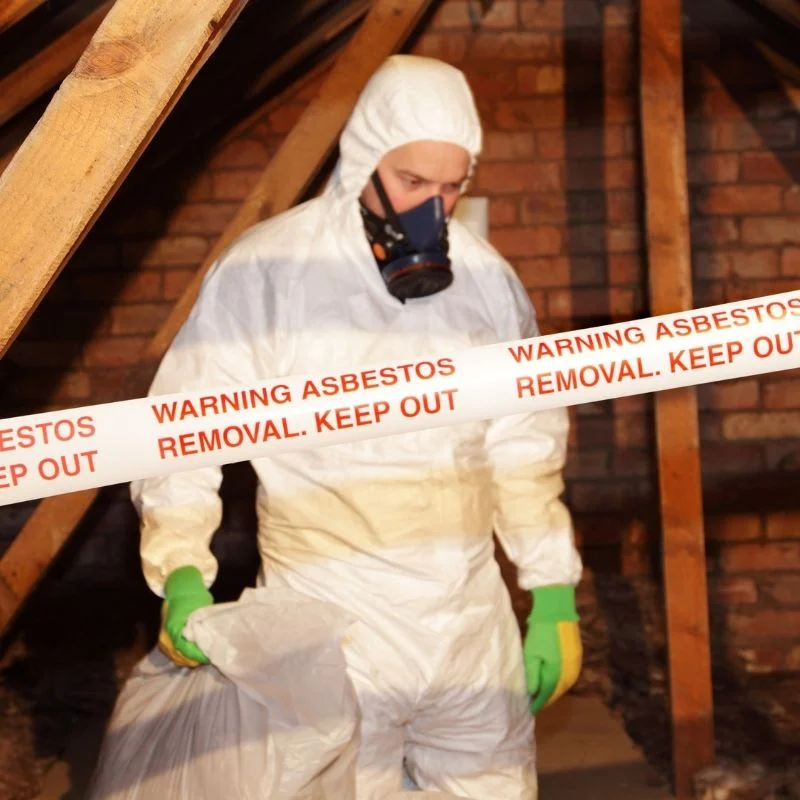
Secondary asbestos exposure claims
Compensation is not limited to the person who worked directly with asbestos. Some people became ill because asbestos dust was brought home on work clothes, overalls, boots or tools.
We speak to families where asbestos dust was carried into the home on contaminated work clothes, leading to exposure during ordinary tasks such as shaking out overalls, washing workwear by hand, or handling dusty boots and tools. These are known as secondary exposure claims, and they can be just as serious as claims arising from direct workplace exposure.
Secondary exposure often happened where the worker had been employed in heavy industry or construction and came home covered in asbestos dust after a shift. In those cases, the key evidence may come from the worker’s job history rather than the injured person’s own employment record.
That is why these claims need careful investigation. We look at who was exposed, how exposure is likely to have happened, and what evidence can support it. If needed, we can then place the case with an expert asbestos solicitor suited to the complexity of the claim.
Can I Make An Asbestos Compensation Claim if A Loved One Has Died?
Yes. If a loved one has died from mesothelioma or another asbestos-related disease, it may still be possible to make a claim in Scotland. We know this is never an easy subject to deal with; many families come to it only when they feel ready.
In general, a claim can be pursued by the executor on behalf of the deceased’s estate, and certain immediate family members may also have rights to claim following the death. In Scotland, that can include claims connected to the financial and emotional loss suffered by close relatives as well as the claim that belonged to the person who died.
The time limit is important. In most cases, the claim must be brought within three years of the date of death, or within three years of the date the asbestos-related cause of death became known. If your loved one had already started a claim before they died, the executor or family can usually continue it.
This often happens where someone is diagnosed at a late stage and dies soon afterwards, leaving the family to gather details of old jobs, former employers and medical records at an already difficult time.
Taking advice early can help preserve important evidence and make the position clearer. When you feel ready, we can talk things through carefully and help put the right legal support in place.
How Long Do You Have To Claim Compensation For Asbestos?
In Scotland, you will usually have three years to make an asbestos claim. In most cases, that time limit runs years from the date you were diagnosed, or from the point when you knew, or could reasonably have known, that your illness was linked to asbestos exposure.
That matters because asbestos diseases often have a very long latency period. Someone may have worked around asbestos dust in a shipyard, factory or on a building site in the 1970s or 1980s, but not be diagnosed until 10, 20 or even 40 years later. The legal clock usually starts at diagnosis or date of knowledge, not when the exposure first happened.
There can be exceptions to the usual time limit. For example, someone may first be diagnosed with one asbestos-related condition and later go on to develop another, more serious condition linked to the same exposure. In that situation, the time limit may need to be considered again in light of the later diagnosis.
The court may also be asked to allow a claim to proceed after the normal deadline has passed. That is why it is important to seek legal advice as early as possible.
Making A Personal Injury Claim In Scotland
Our panel of experienced personal injury lawyers excel in handling cases against well-funded insurance companies.
Our specialised injury lawyers will assist you with your claim, keep you informed throughout the whole process, and provide you with legal advice that is easy to understand.
01
Get In Touch.
Tell us your story, we're here to listen and provide you with an initial assessment based on your circumstances.
02
We’ll Prepare Your Claim.
We'll be by your side to take care of the legal process. We'll keep you informed of every step of the way.
03
Receive Compensation.
If your claim is successful, we'll ensure that you get your compensation as soon as possible.

"Former Shipyard Worker Diagnosed Decades After Exposure"
John, from Inverclyde, spent much of the 1970s working in and around engine rooms at a busy shipyard on the west coast of Scotland. At the time, he thought the dust around pipe insulation and boiler lagging was just part of the job. Like many workers of that generation, he was never given proper warnings about asbestos or the risks of breathing it in.
“John contacted HD Claims for guidance.”

"Secondary Exposure Claim After Washing Contaminated Work Clothes"
Margaret, from Fife, had never worked in construction or heavy industry herself. For years, however, she washed her husband’s dusty overalls by hand after he came home from work as a heating engineer. She had no reason to think that the dust on his clothes could be dangerous.
“They contacted HD Claims after reading that asbestos claims are not limited to workers directly employed around asbestos.”
Who Pays For Asbestos Claims?
In most asbestos cases, compensation is paid by the employer’s liability insurer, not personally by the current business owner. Employers were required to have insurance in place to cover injury and disease claims arising from work, and that is usually where the payment comes from.
That is why a claim can still be possible even if the company has changed hands, been dissolved or disappeared altogether. If the employer no longer exists, the aim is usually to trace the insurer that covered the business when the asbestos exposure happened and pursue the claim through that policy.
For many families, that is a real relief. They are not trying to recover compensation from an individual manager or today’s owner of a business. The focus is on the insurance that should have been there to protect workers in the first place.
If no insurer can be traced, there may still be another route. For people with diffuse mesothelioma, the diffuse mesothelioma payment scheme can provide lump sum payments as a last resort where a civil claim cannot be pursued because the former employer no longer exists and no insurer can be found.
DEDICATED CLAIMS ADVISORS
Our dedicated claims advisors are always available to offer free legal advice.
100% NO WIN NO FEE CLAIMS
All our claims are processed on a No Win No Fee basis; you pay nothing if you lose.

MILLIONS SECURED IN DAMAGES
To date, we have secured millions in damages.
THOUSANDS OF SATISFIED CLIENTS
To date, we have helped thousands of clients recover compensation and continue to do so.
Meet The Team

Maisie MacLeod
Senior Claims Manager

Ella Campbell
Head of Serious Injury

Freya Douglas
Long-Term Illness Specialist
Scottish Asbestos Claim Lawyers
When you come to HD Claims, we take responsibility for the legal strategy from the outset and match your case with Scottish solicitors who understand industrial disease litigation. That matters in asbestos cases, where success often depends on tracing old employers, finding historic insurers and building the right medical and employment evidence.
We work with solicitors experienced in mesothelioma, pleural plaques, asbestos-related lung cancer and claims for asbestosis. So whether you need an asbestos lawyer for a straightforward workplace exposure claim or a more complex family case, we help make sure it is handled by the right expert.
Funding is often available on a no win no fee basis, which can make it easier to move forward without taking on unnecessary financial pressure. We will explain the process clearly, keep things moving, and stay involved from start to finish.
We also understand that asbestos cases are about more than compensation alone. Many families need practical support as well as legal advice, so where appropriate, we can also direct them to organisations such as Asbestos Action and Clydebank Asbestos Group.
If you want to know more about us and how we can help you, call us on 01412801112.
FAQs
Is There A Time Limit For Making An Asbestos Claim?
Yes. In Scotland, you will usually have three years to start a claim. In most cases, that runs from the date you were diagnosed, or from the point when you knew, or could reasonably have known, that your condition was linked to asbestos exposure. That is important because asbestos diseases often appear decades after the exposure itself.
There can be exceptions, especially in complex disease cases or where a loved one has died, but it is always better to get advice early, while employment, medical and witness evidence is still easier to trace.
How Do I Know If I’ve Been Exposed To Asbestos?
Many people do not know for certain at the time. That is because asbestos-related disease often develops slowly, with symptoms appearing 15 to 60 years later. Regular occupational exposure in older workplaces such as shipyards, factories, schools, boiler rooms and construction sites carries the highest risk.
Common signs can include shortness of breath, a persistent cough, chest pain and fatigue, but some people have no symptoms at first and only discover a problem after a chest X-ray or CT scan. If you think you may have been exposed, tell your GP about your work history or any secondary exposure at home.
How much compensation will I get for mesothelioma in the UK?
There is no fixed figure. The value of a mesothelioma claim depends on the full impact of the illness, including pain and suffering, loss of earnings or pension, care needs, travel costs, and, in fatal cases, the financial and practical losses suffered by dependants.
In some cases, compensation is recovered through a civil claim against an employer or insurer. Where that is not possible, the Diffuse Mesothelioma Payment Scheme may provide a payment as a last resort for eligible people or their dependents.
What is a safe amount of asbestos?
There is no truly safe amount of asbestos exposure. The Health and Safety Executive does set a workplace control limit, but it is not a “safe” level. The aim is to keep exposure as far below that limit as possible and, where asbestos is present, to avoid disturbing it unless it is handled under proper safety controls.
For most people, the practical point is this: if you think you worked around damaged insulation, boiler lagging, ceiling tiles, pipe coverings or old building materials containing asbestos, do not assume a small amount was harmless. It is worth getting medical and legal advice based on your own history.
What are the first signs of asbestosis?
The earliest signs are often subtle. Common symptoms include shortness of breath, a persistent cough, wheezing, unusual tiredness, and pain in the chest or shoulder. In some people, there are no clear symptoms at first, which is why the condition is sometimes picked up only after scans or other tests.
One reason people miss the signs is that asbestosis usually develops very slowly. Symptoms often do not appear until 20 to 30 years after exposure, so people may put breathing problems down to age, smoking, or general wear and tear instead of an asbestos-related condition.
What is the survival rate for asbestosis?
There is no single survival rate for asbestosis that applies to everyone. Unlike some cancers, prognosis depends heavily on how advanced the lung scarring is, how much lung function has been lost, whether there has been any further exposure, and the person’s overall health. According to the NHS, there is no cure, but treatments such as pulmonary rehabilitation, inhalers and oxygen therapy can help manage symptoms.
So the more accurate answer is that outlook varies a lot from person to person. Anyone who has been diagnosed should speak to their consultant about their own prognosis rather than rely on a general figure online.
Can I claim if I was exposed to asbestos in rented or unsafe housing?
Yes, you may be able to. Asbestos exposure does not only happen at work. We also hear from people who were exposed in older rented homes where damaged ceilings, insulation, wall panels or repair work may have released asbestos dust.
For example, you may have lived in a property where building materials were disturbed during repairs, or where your landlord failed to deal with obvious damage in an appropriate manner. In such cases, the problem may extend beyond asbestos and indicate broader issues with the property’s condition.
If that sounds familiar, we can look at what happened and talk you through the options. Depending on the circumstances, you may have grounds for an asbestos claim, a housing disrepair claim, or both.
We’re Here To Help When You Need Us Most.
Call us on 0141 2801112, or leave us a message below to request a call back and one of our team will be in touch as soon as we can.