



- Obligation-Free Consultation
- No Win, No Fee
- Award-Winning Lawyers
As Featured In:






















Check Out Our Awesome Reviews Below:
EXCELLENTTrustindex verifies that the original source of the review is Google. My insurance company recommended a firm that charged 30% and had poor reviews. I went with Hamilton Douglas instead, who charged far less and were completely transparent. They were professional, communicative, and secured me an excellent settlement. Do your research and pick them.Posted onTrustindex verifies that the original source of the review is Google. Very good service and excellent legal advice provided by HD Claims. Their team or personal injury lawyers were so understanding and accomodating, and managed to settle my injury claim in a timely manner.Posted onTrustindex verifies that the original source of the review is Google. I want to thanks the entire team, the results were as expected, very prompt and explicit in absolutely all the details provided, I recommend and I will definitely call again in the future,thanks again and i recommend you with all my heartPosted onTrustindex verifies that the original source of the review is Google. HD Claims are the real deal. Their car accident lawyers took my case seriously and got me a great result after my crash. They made the whole process easy and kept me informed every step of the way. Don't hesitate – if you need help after an accident, choose HD Claims. You won't regret it!Posted onTrustindex verifies that the original source of the review is Google. Sorted my car accident claim out super fast!Posted onTrustindex verifies that the original source of the review is Google. I got best service from them, Adnan Bhai helped me a lotPosted onTrustindex verifies that the original source of the review is Google. Friendly and professional service. I would definitely recommend to family and friends. Thank you so much, Adnan!Posted onTrustindex verifies that the original source of the review is Google. Excellent service without a doubt! 5 stars Adnan, have made a difficult time a lot easier with his outstanding support and his communication and desire for the 100% trusted and would not hesitate to recommend you to anyone should they need you.Thank you so much!Posted onTrustindex verifies that the original source of the review is Google. Process handled quickly and professionally. Kept up to date with all handlings of case. Honestly cannot recommend them enough. Thank you.Verified by TrustindexTrustindex verified badge is the Universal Symbol of Trust. Only the greatest companies can get the verified badge who has a review score above 4.5, based on customer reviews over the past 12 months. Read more
Personal Injury Claims Calculator Scotland
Our personal injury claims Scotland calculator can help you understand what compensation might look like if you are thinking about making a claim after an accident. It provides a clear starting point based on the guidelines used by Scottish solicitors, insurers, and courts. The outcome is only a guideline, as each case is unique.
Your final award may change if your injury has an impact on your work, lost earnings, or daily life, which is part of the overall claims process. It can also change if you have multiple injuries, as the overall impact is important. For a clearer understanding of your potential compensation, contact us today. Our panel of No Win No Fee Solicitors can assess your situation and help you start your claim with confidence.
Head & Neck Injuries
Brain Damage Compensation Amounts
Brain damage injuries fall into categories ranging from mild to moderate, moderately severe, and severe. The level of compensation depends on several factors, including the extent of cognitive and physical impairment and the long-term impact on daily functioning.
- Less severe brain damage:
- from £13,070 to £36,740
- Moderate brain damage:
- from £36,740 to £186,890
- Moderately severe brain damage:
- from £186,890 to £240,590
- Very severe brain damage:
- from £240,590 to £344,640
Eye Injuries & Loss of Sight
Eye injuries range from minor, short-term conditions that cause mild discomfort and temporary vision changes to severe damage that can result in permanent loss of sight.
- Minor (temporary) eye Injuries:
- from £1,880 to £7,460
- Minor (permanent) eye injuries:
- from £7,780 to £17,900
- Serious but incomplete loss of vision:
- from £20,210 to £33,600
- Complete loss of sight in one eye:
- from £42,030 to £46,780
- Total loss of one eye:
- from £46,780 to £56,080
- Loss of sight in one eye with reduced vision in the remaining eye:
- from £54,550 to £153,390
- Total blindness:
- in the region of £229,260
Neck Injuries
Neck injuries eligible for compensation range from minor soft tissue strains to moderate fractures and dislocations, and up to severe cervical spine injuries that can cause paralysis.
- Minor neck injuries:
- from £2,090 to £6,730
- Moderate neck injuries:
- from £6,730 to £32,840
- Severe neck injuries:
- from £38,800 to £126,550
Hearing Loss & Tinnitus
Compensation for hearing loss depends on the severity of the hearing impairment and the extent of any tinnitus.
- Partial hearing loss and tinnitus:
- from a maximum of £5,980 (slight NIHL/tinnitus) up to £38,850 (severe tinnitus and NIHL)
- Total loss of hearing in one ear:
- from £26,710 to £38,850
- Total deafness:
- from £77,430 to £93,540
Minor Head or Brain Injury
Minor head or brain injuries typically result in limited effects. Your compensation will depend on severity, recovery speed, and ongoing symptoms like headaches.
- Compensation Range:
- You may receive between £1,880 to £10,890
Facial Injuries and Fractures
Compensation depends on severity, treatment, and recovery. Awards may also include amounts for disfigurement and psychological impact.
- Facial fractures:
- (including Le Fort, nose, cheekbones, jaws, teeth): from £930 to £38,850
- Facial disfigurement:
- (from trivial to very severe scarring): from £1,460 to £83,050
Upper Body Injuries
Chest and/or Internal Organ Injury
Chest trauma can damage internal organs, soft tissues, and bones. Compensation depends on impact on life expectancy, ability to work, and lasting symptoms.
- Minor chest injuries:
- from £1,880 to £10,750 (£5,000 to £11,820)
- Moderate chest injuries:
- £10,750 to £46,780 (£11,820 to £51,460)
- Serious chest injuries:
- from £56,100 to 128,060 (£61,710 to £140,870)
Back Injury
From minor soft tissue damage healing without surgery, to severe injuries affecting the spinal cord requiring surgical intervention and causing long-term disability.
- Minor back injury:
- up to £10,670 (£11,730)
- Moderate back injury:
- from £10,670 to £33,080 (£11,730 to £36,390)
- Severe back injury:
- from £33,080 to £137,330 (£36,390 to £151,070)
Hand Injury
Compensation reflects the hands' crucial role in function and appearance, considering if the dominant hand is affected.
- Minor hand, finger and thumb injuries:
- up to £4,055 (£4,461)
- Very serious injury to thumb:
- from £16,720 to £29,860 (£18,390 to £32,850)
- Serious hand injuries (inc. severe finger fractures):
- from £24,740 to £52,810 (£27,220 to £58,100)
- Amputation of index, middle and/or ring fingers:
- £52,810 to £77,430 (£58,100 to £85,170)
- Total or effective loss of one hand:
- £82,040 to £93,540 (£90,250 to £102,890)
- Total loss of both hands (or use of):
- from £120,040 to £171,920 (£132,040 to £189,110)
Wrist Injury
Wrist injury compensation amounts vary based on factors like fracture severity, recovery time, and permanent disability.
- Very minor fractures/soft tissue injuries:
- from £3,010 to £4,050 (£3,310 to £4,450)
- Uncomplicated Colles' fracture:
- In the region of £6,340 (£6,970)
- Less severe injuries with some permanent disability/pain:
- £10,750 to £20,900 (£11,820 to £22,990)
- Injuries resulting in complete loss of wrist function:
- £40,630 to £51,070 (£44,690 to £56,180)
Arm Injury
Ranging from minor injuries that fully heal to severe cases resulting in permanent loss of function or amputation.
- Moderate/minor elbow injuries (no permanent damage):
- up to £10,750 (£11,820)
- Simple fractures of the forearm:
- from £5,630 to £16,380 (£6,190 to £18,020)
- Arm injuries resulting in permanent/substantial disablement:
- from £33,430 to £51,070 (£36,770 to £56,180)
- Severe arm injuries:
- from £82,040 to £111,690 (£90,250 to £122,860)
- Amputation (one arm or part of one):
- from £82,040 to not less than £117,010 (£90,250 to >£128,710)
- Loss of both arms:
- £205,420 to £255,930
Shoulder Injury
From minor injuries recovering fully quickly to severe cases causing significant disability. Compensation depends on pain, suffering, and lasting symptoms.
- Minor shoulder injury:
- from £2,090 to £6,730 (£2,300 to £7,410)
- Moderate shoulder injury:
- from £6,730 to £10,890 (£7,410 to £11,980)
- Serious shoulder injury:
- from £10,890 to £16,380 (£11,980 to £18,020)
- Severe shoulder injury:
- from £16,380 to £40,970 (£18,020 to £45,070)
Lower Body Injuries
Hip and/or Pelvis Injury
Hip and pelvis injuries can have a profound impact, ranging from minor soft tissue injuries to extensive fractures leading to significant, permanent disability.
- Lesser hip/pelvis injuries (minimal lasting disability):
- up to £10,750 (£11,820)
- Moderate hip/pelvis injuries (some permanent disability/surgery):
- from £10,750 to £33,430 (£11,820 to £36,770)
- Severe hip/pelvis injuries (extensive fractures/disability):
- from £33,430 to £111,690 (£36,770 to £122,860)
Reproductive Organ Injuries
Compensation depends on factors such as age, psychological impact, effect on family life, fertility, and severity of injury.
- For men:
- from around £5,630 (£6,190) for minor injuries up to £131,290 (£144,420) for total loss of sexual organs.
- For women:
- from £2,890 (£3,180) where fertility is not affected up to £144,520 (£158,970) for the most severe injuries and loss of a foetus.
Other Internal Organ Injuries
Compensation depends on severity, necessity of organ removal, long-term impact, pain, and lasting effects on daily life.
- Injuries to bowels:
- from £10,750 to £157,150 (£11,820 to £172,860)
- Injuries to bladder:
- from £19,980 to £157,150 (£21,970 to £172,860)
- Injuries to kidney(s):
- from £26,260 to £179,530 (£28,880 to £197,480)
- Injuries to spleen:
- from £3,710 to £22,440 (£4,080 to £24,680)
- Hernia injuries:
- from £2,900 to £7,780 (£3,180 to £8,550)
Leg Injuries
Knee Injuries
Ranging from minor injuries with complete recovery to severe injuries involving joint damage, ongoing pain, or need for replacement.
- Minor knee injuries (near/complete recovery):
- up to £5,160 (£5,680)
- Moderate knee injuries (dislocations, torn cartilage, mild instability):
- up to £22,340 (£24,580)
- Severe knee injuries (permanent limitations, ongoing pain):
- from £22,340 to £90,290 (£24,580 to £90,290)
General Leg Injuries
From simple fractures and soft tissue damage to severe injuries approaching amputation, causing major functional loss or nerve damage.
- Less severe leg injuries (simple fractures, soft tissue):
- £2,090 to £23,680 (£2,300 to £26,050)
- Severe leg injuries (complex fractures, crush injuries):
- from £23,680 to £115,940 (£26,050 to £127,530)
Leg Amputation Injuries
Compensation depends on extent of loss (one or both legs), complications, costs of prosthetics, and psychological impact.
- Leg amputation injuries:
- from £83,590 to £240,590 (£91,959 to £264,650)
Feet Injuries
Toe Injuries
Compensation varies by severity, from moderate fractures healing quickly to serious crush injuries or amputation.
- Moderate toe injuries (simple fractures, heal quickly):
- up to £8,190 (£9,010)
- Serious toe injuries:
- from £8,190 to £11,730 (£9,010 to £12,900)
- Severe toe injuries:
- from £11,730 to £17,970 (£12,900 to £29,770)
- Amputation of toe or toes:
- from around £26,710 to £47,830 (£29,380 to £52,620)
Foot Injuries
Depends on severity, recovery time, and long-term effects such as deformity, disability, or total loss.
- Modest foot injuries (simple fractures, ligaments):
- from £5,980 to £11,730 (£6,580 to £12,900)
- Moderate foot injuries (displaced fractures, deformity):
- from £11,730 to £21,320 (£12,900 to £23,460)
- Serious foot injuries (continuing pain, risk of arthritis):
- £21,320 to £33,450 (£23,460 to £36,790)
- Severe foot injuries (major mobility limitations, lasting pain):
- from £35,810 to £59,730 (£39,390 to £65,710)
- Very severe (permanent severe pain/disability, partial loss):
- from £71,640 to £93,540 (£78,800 to £102,890)
- Amputation of one foot:
- from £71,640 to £93,540 (£78,800 to £102,890)
- Amputation of both feet:
- from £144,520 to £171,920 (£158,970 to £189,110)
Ankle Injuries
From minor soft tissue injuries to severe fractures causing deformity or risk of amputation.
- Modest ankle injuries (minor/undisplaced fractures):
- up to £11,730 (£12,900)
- Moderate ankle injuries (minor impairment):
- from £11,730 to £22,680 (£12,900 to £24,950)
- Severe ankle injuries (extensive treatment, residual disability):
- from £26,710 to £42,710 (£29,380 to £46,980)
- Very severe ankle injuries:
- from £42,710 to £59,480 (£46,980 to £65,420)
- Achilles tendon injuries:
- from £6,200 (£6,820) (minor) up to £32,780 (£36,060) (most serious)
Here's The Personal Injury Compensation Chart:
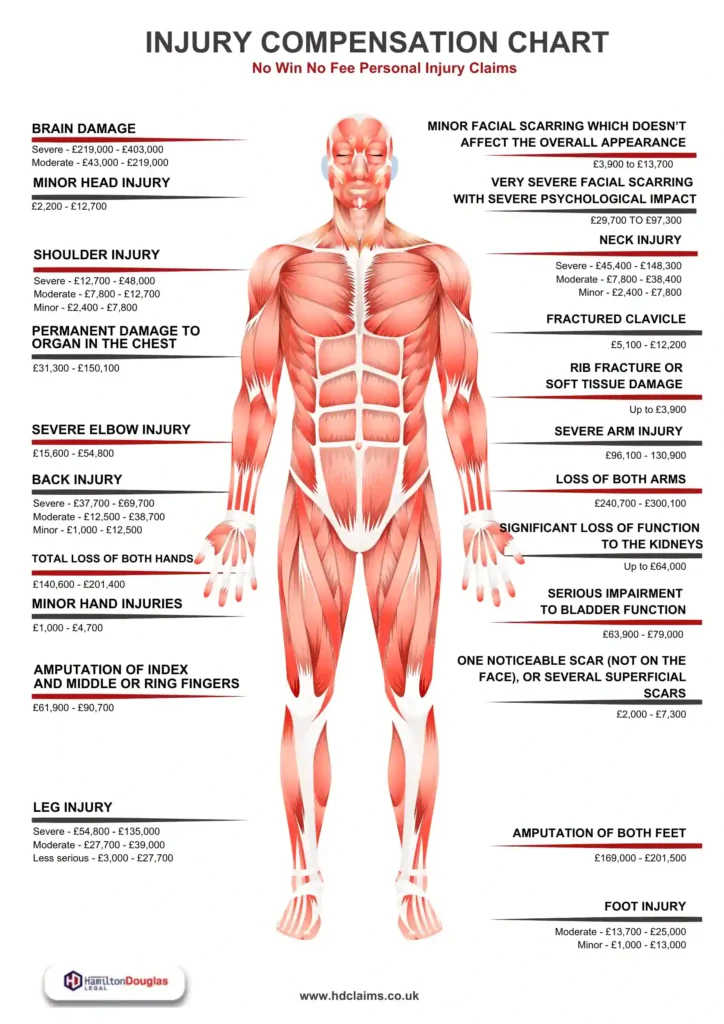
How Much Compensation Can You Receive For A Personal Injury Claim In Scotland?
Head & Brain Injuries Compensation
Head, brain, and upper spine injuries can affect memory, mood, and daily tasks, so compensation for these injuries often depends on how serious the injury sustained is. Any figures you see are a personal injury compensation estimate, not a fixed promise, because your symptoms, recovery time, and financial losses can all change the value of your claim. Claims may also cover related harm around the head area, so it is a good idea to look at the full impact of injuries, including physical and psychological effects.
Below are typical guideline ranges that solicitors and insurers use when valuing pain and suffering. Your final amount could be adjusted based on medical evidence and the extent to which the injury impacts your work and daily life.
| Category | Injury Type | Severity Level | Compensation Amount (£) | Notes |
|---|---|---|---|---|
| Head, Brain & Senses | Facial Scarring | Slight | £1,125 - £2,300 | |
| Back Teeth Damage | Serious | Up to £1,300 | Per tooth | |
| Whiplash | Minor | Up to £3,000 | Recovery: weeks to 1 year | |
| Eye Injury | Minor | £1,675 - £3,000 | ||
| Psychological Damage / Anxiety | Minor | £1,170 - £4,450 | ||
| Psychological Damage | Moderate | £1,170 - £4,450 | Ongoing but treatable | |
| Facial Scarring | Mild | £2,300 - £6,000 | ||
| Whiplash | Moderate | £3,300 - £6,000 | Recovery: approx. 2 years | |
| Front Teeth Loss / Damage | Serious | Up to £8,000 | Several teeth | |
| Head Injury | Minor | £1,675 - £9,700 | ||
| Whiplash | Severe | £6,000 - £10,450 | Risk of further complications | |
| Facial Scarring | Significant | £6,000 - £13,650 | ||
| Neck Pain | Severe | £10,450 - £19,000 | Long-term movement limits | |
| Hearing Loss (One Ear) | Total | £20,500 - £30,000 | ||
| Hearing Loss | Severe | Up to £34,600 | Accompanied by tinnitus | |
| Facial Scarring | Moderate | £13,650 - £36,800 | Less severe | |
| Facial Scarring | Very Severe | £36,800 - £74,000 | ||
| PTSD | Severe | Up to £88,000 | ||
| Loss of Sight (One Eye) | Severe | £73,000 - £136,700 | Reduced sight in the other eye | |
| Blindness | Total | ~£204,250 | ||
| Brain Damage | Severe | £214,350 - £307,000 | ||
| --- | --- | --- | --- | --- |
Body, Back Or Chest Injury Compensation
Injuries to the body, back, or chest can limit your movement, affect your sleep, and make everyday tasks harder. Upper body injuries can also put strain on other areas, because you may change how you walk, lift, or sit to cope with pain. Compensation is usually linked to the severity of the symptoms and how long the effects last.
The figures below are guideline ranges, and they are best read as a helpful starting point. A personal injury calculator can give a rough idea, but the final value depends on medical evidence and the impact on your work and home life. More complex cases may also include compensation to cover long-term care needs, psychological effects, and further treatment.
| Category | Injury Type | Severity Level | Compensation Amount (£) | Notes |
|---|---|---|---|---|
| Body, Back or Chest | Chest Injury | Minor | Up to £2,600 | Rib or soft tissue damage |
| Rib Fracture | Minor | Up to £3,000 | Full recovery expected | |
| Back Injury | Moderate | £9,500 - £21,100 | Affecting muscles or ligaments | |
| Lungs and Chest Damage | Severe | £20,500 - £36,000 | ||
| Back / Spinal Injury | Severe | £29,475 - £53,000 | Persistent pain & mobility impact | |
| Back / Spinal Injury | Very Severe | £56,375 - £67,200 | Bladder/bowel issues; future surgery needed | |
| Paraplegia | Total | £166,500 - £216,000 | ||
| Quadriplegia | Total | £246,750 - £307,000 | ||
| --- | --- | --- | --- | --- |
If your symptoms affect your earnings, travel costs, or ability to care for yourself, these damages may also be included in your claim.
Arm, Shoulder, Elbow Injury Compensation
Arm, shoulder, and elbow injuries can make simple tasks like driving, lifting, or typing painful and slow. In Scotland, the value of a claim often depends on how much function you lose, the treatment you need, and your recovery time. A personal injury calculator Scotland can offer an estimate if you have suffered these types of injuries, but your final compensation will reflect your medical evidence and the effect of those injuries on your work and daily life.
Below are typical guideline ranges used when estimating compensation settlements. However, your final compensation depends on the severity of the injury and whether you are likely to recover fully. If another party caused the accident, you may be entitled to compensation.
| Category | Injury Type | Severity Level | Compensation Amount (£) | Notes |
|---|---|---|---|---|
| Arm, Shoulder & Elbow | Shoulder Injury | Minor | Up to £6,000 | Soft tissue; recovery < 2 years |
| Elbow Injury | Minor | Up to £7,800 | Simple fracture; no long-term effect | |
| Clavicle Fracture / Break | Moderate | £3,900 - £9,300 | ||
| Elbow Injury | Moderate | £7,800 - £10,300 | Impaired function | |
| Arm Fracture | Moderate | £5,000 - £14,600 | ||
| Shoulder Damage | Severe | £14,600 - £36,500 | Damage to the brachial plexus | |
| Elbow Injury | Severe | Up to £45,500 | Loss of function | |
| Amputation (Arm) | Very Severe | Up to £83,325 | Amputation above the elbow | |
| Loss of Arm | Total | Up to £90,000 | Single arm | |
| Loss of Arms | Total | Up to £228,000 | Both arms | |
| --- | --- | --- | --- | --- |
Hand Or Fingers Injury Compensation
Hand, finger, and wrist injuries can make daily life harder, from getting dressed to cooking and using a phone. In Scotland, compensation often reflects how much function you lose, how long symptoms last, and whether you can return to work. If you are using a road traffic accident injury compensation calculator Scotland, remember it gives a guide only, and the final value will depend on the evidence.
The figures below show common guideline ranges for pain and suffering. Your claim may also include related financial losses such as travel expenses and medical costs, if they are linked to the accident. Where there is lasting weakness, stiffness, or deformity, the compensation is usually higher.
| Category | Injury Type | Severity Level | Compensation Amount (£) | Notes |
|---|---|---|---|---|
| Hand or Fingers | Hand Injury | Minor | £700 - £3,300 | No long-term issues |
| Thumb Injury | Minor | Up to £3,000 | ||
| Finger Fracture | Minor | Up to £3,600 | ||
| Wrist Fracture | Minor | Up to £3,600 | Uncomplicated | |
| Wrist Fracture | Moderate | Up to £7,800 | Full recovery | |
| Finger Fracture / Amputation | Severe | Up to £19,000 | All or part of a finger | |
| Loss of Fingers | Severe | Up to £27,000 | Deformity and reduced grip | |
| Loss of Thumb | Severe | £27,000 - £41,675 | ||
| Wrist Injury | Severe | Up to £45,500 | Permanent disability | |
| Hand Injury | Severe | £22,050 - £47,050 | Permanent disability | |
| --- | --- | --- | --- | --- |
Hip Or Pelvic Injury Compensation
Hip and pelvic injuries can cause ongoing pain and make walking, sitting, and sleeping difficult for an injured person. In Scotland, these injuries can also lead to lower back problems, because the body changes its movement patterns to protect the sore area. If you use a car accident personal injury compensation calculator, treat the result as a guide and not a final figure you will definitely get.
Compensation often depends on how long the symptoms last and whether you recover fully. More serious fractures may leave lasting weakness or disability, which usually increases the award. Your claim may also include related financial losses such as travel and medical expenses, if they are reasonable and linked to the injury.
| Category | Injury Type | Severity Level | Compensation Amount (£) | Notes |
|---|---|---|---|---|
| Hip or Pelvic | Pelvic Injury | Minor | Up to £3,000 | Full recovery |
| Hip Injury | Minor | Up to £5,800 | Good recovery | |
| Pelvic Injury | Minor | £3,000 - £9,575 | Minor to no lasting effects | |
| Pelvic Injury | Moderate | £9,575 - £29,800 | Less serious | |
| Hip Injury | Severe | £3,000 - £29,800 | Minor or no disability | |
| Pelvic Fracturing | Severe | £29,800 - £99,500 | Extensive | |
| Hip Injury | Severe | £29,000 - £99,500 | Lasting effects & permanent disability | |
| --- | --- | --- | --- | --- |
Leg, Knee & Ankle Injury Compensation
Injuries to the leg, knee, or ankle can make it hard to walk, work, and socialise, which can have an impact on almost every part of your life. The final value of your claim will depend on your medical evidence and how it affects your quality of life. A car accident claims calculator can give you an estimate.
These injuries can also lead to stress, sleep problems, and low mood, especially when pain lasts or recovery is slow. If this happens, a related psychological injury may be considered as part of the wider claim. The compensation award within each bracket can also depend on whether long-term pain remains and how well you regain movement.
Typical guideline ranges include the following.
| Category | Injury Type | Severity Level | Compensation Amount (£) | Notes |
|---|---|---|---|---|
| Leg, Knee & Ankle | Ankle Strain / Sprain | Minor | Up to £4,000 | Good chance of recovery |
| Knee Injury | Minor | Up to £4,600 | Lacerations, twists, or soft tissue | |
| Leg Fracture | Minor | Up to £10,000 | Simple fracture; good recovery | |
| Knee Pain | Moderate | Up to £10,000 | Ongoing pain and discomfort | |
| Ankle Injury | Moderate | Up to £10,400 | Fracture/ligament damage; moderate disability | |
| Leg Fracture | Severe | Up to £21,000 | Incomplete recovery | |
| --- | --- | --- | --- | --- |
Other factors that can affect value include whether a prosthetic limb can be fitted, where an amputation occurs, and how much permanent or recurring pain remains.
Foot Or Toe Injury Compensation
Foot and toe injuries often happen after a slip or trip, and they can make walking, standing, and travelling to work painful. In Scotland, compensation usually reflects how much your mobility is affected and whether your earnings are affected. If you are making a personal injury claim in Scotland, you need help from a specialist solicitor.
The value of your claim will vary based on whether one or both feet are injured and the duration of the symptoms. Ongoing pain, long-term stiffness, and limits on footwear can also push the valuation higher. Claims may also take into account how the injury affects your social life and independence in daily life.
Typical guideline ranges include the following.
| Category | Injury Type | Severity Level | Compensation Amount (£) | Notes |
|---|---|---|---|---|
| Foot or Toe | Foot Injury | Moderate | ~£5,300 | Almost full to full recovery |
| Toe Fracture | Minor | Up to £7,300 | Full recovery | |
| Foot Injury | Severe | Up to £10,000 | Fracture/ligament/soft tissue; permanent difficulties | |
| Toe Injury | Moderate | £7,300 - £10,450 | Less severe | |
| Amputation (Toe) | Severe | Up to £23,800 | Large toe |
Other factors that can affect the final amount include whether prosthetics can be used, the level of lasting disability, and the extent of any recurring pain.
| Body Part | Mild | Moderate | Severe |
|---|---|---|---|
| HEAD INJURIES | £2500 | £1800 | £18000+ |
| NECK INJURIES | £4000 | £14000 | £30,000 + |
| SHOULDER INJURIES | SHOULDER INJURIES | £4000 | £8000 |
| ARM INJURIES | £2500 | £6800 | £12,000 + |
| HIP INJURIES | £5000 | £13,000 | £12,000 + |
| KNEE INJURIES | £6000 | £11,000 | £150,000 |
| ANKLE INJURIES | £5000 | £13,000 | £30,000 + |
Speak to our compensation experts
It doesn't cost you anything to know where you stand.
Fill out the form, and we'll get back to you within one hour.
Need to speak to us sooner?
Call us on 0141 280 1112
- Over £3+ Million in Settlements
- No Win, No Fee
- Supporting Scots Since 2010
- 10 Offices Around Scotland
Request a FREE call
How Do You Calculate Pain And Suffering In Scotland?
Estimating pain and suffering in a personal injury claim in Scotland is like gauging the level of discomfort or anguish one has endured – it’s quite challenging because these experiences are personal and subjective. Nonetheless, there are methods to approximate this aspect of your claim:
- Use of Guidelines: Personal injury solicitors often refer to guidelines, such as those provided by the Judicial Studies Board, which suggest compensation ranges for various types of injuries. These guidelines are based on past court cases and give an idea of what courts have awarded for similar injuries in the past.
- Severity and Impact: The amount depends mainly on your injury’s severity and how much it has affected your life. For example, an injury causing long-term pain or emotional distress will likely be valued higher than a minor injury that heals quickly.
- Daily Rate Method (Diary of Suffering): Sometimes, a daily rate or ‘per diem’ approach is used. This involves assigning a daily amount to your pain and suffering, starting from the day of the injury until you’re expected to fully recover. Keeping a diary of your daily struggles and pain levels can be helpful in this method.
- Professional Assessment: Consulting a legal expert is crucial. They can provide a more accurate estimate based on their experience and knowledge of similar cases. They will consider factors like the duration of your pain, any permanent disability, and the impact on your daily activities.
- Multiplying Special Damages: Another standard method involves multiplying your special damages (like medical bills and lost earnings) by a certain number (usually between 1 and 5) based on the severity of your pain and suffering.
Remember, these are just methods to estimate pain and suffering compensation, and the actual amount can vary. The nature of personal injury claims is highly individual, and factors like medical evidence, impact on lifestyle, and psychological effects play a significant role in determining the compensation for pain and suffering.
Making A Personal Injury Claim In Scotland
Our panel of experienced personal injury lawyers excel in handling cases against well-funded insurance companies.
Our specialised injury lawyers will assist you with your claim, keep you informed throughout the whole process, and provide you with legal advice that is easy to understand.
01
Get In Touch.
Tell us your story, we're here to listen and provide you with an initial assessment based on your circumstances.
02
We’ll Prepare Your Claim.
We'll be by your side to take care of the legal process. We'll keep you informed of every step of the way.
03
Receive Compensation.
If your claim is successful, we'll ensure that you get your compensation as soon as possible.

"A Student’s Journey from Trauma to Triumph: Efthymios’s Fight for Justice After a Devastating Car Accident"
When Efthymios was injured in a car accident, he was left with severe facial injuries. He didn’t know how he would manage his recovery and studies.
“When I got in contact with HD Legal, they made me feel supported. They were incredibly understanding and fought hard for me, ensuring I received the compensation I deserved.”

"Cracked Pavement, Broken Ankle: How HD Legal Helped Margaret Find Justice and Peace of Mind"
When Margaret tripped on a neglected crack in the pavement in Glasgow, she shattered her ankle and was forced to take months off work, unsure how she would manage.
“HD Legal were a lifeline for me. They took care of everything—from gathering crucial evidence to battling the council—and gave me the peace of mind I needed to focus on my recovery.”

"Blown Away: HD Legal Fights for Douglas After Faulty Washing Machine Explosion"
When Douglas’s new washing machine exploded, it caused a fire that damaged his kitchen and left him with painful burns.
“HD Legal fought relentlessly for me when it seemed like no one else would. They were thorough, professional, and supported me every step of the way, helping me recover both physically and financially.”

"From Misdiagnosis to Recovery: How HD Legal Fought for Eilidh’s Justice and Secured the Care She Needed"
When Eilidh’s severe abdominal pain was repeatedly misdiagnosed, her condition worsened, leading to the need for urgent surgery.
“HD Legal stood by me when I felt lost. They were thorough, professional, and fought tirelessly to get me the care and compensation I needed to heal.”

"Falling from Heights, Rising with Justice: How HD Legal Secured Compensation for Alistair After a Workplace Accident Involving Faulty Scaffolding"
Alistair Campbell’s fall from faulty scaffolding left him with serious injuries and months of recovery.
“HD Legal’s panel of solicitors fought for me, ensuring I received the support needed to move forward.”
How Do You Calculate Loss Of Earnings For Personal Injury In Scotland?
Calculating loss of earnings due to a personal injury in Scotland is a bit like figuring out what you’ve missed out on financially because you couldn’t work. It’s pretty straightforward but needs a bit of number crunching. Here’s how it’s typically done:
- Gather Your Pay Slips: Collect your recent pay slips or wage statements. They are like the main ingredients in your calculation recipe. They show how much you usually earn.
- Calculate Your Missed Earnings: To calculate your missed earnings, multiply your regular daily or weekly pay by the number of workdays or weeks you missed due to your injury. This gives you a straightforward figure of your immediate financial loss. It’s about tallying up what you would’ve earned if you hadn’t been injured.
- Consider Overtime and Bonuses: Include these in your calculation if you usually work overtime or receive regular bonuses. It’s all about what you would have earned if you hadn’t been injured.
- Factor in Sick Pay: If you received sick pay while off work, this amount should be deducted from your total lost earnings. Essentially, you’re aiming to find out the net loss – what you lost minus what you still received. It’s like balancing your lost income with any compensation you get while recovering.
- Think About Future damages: Consider how your injury might impact your earnings down the line for future damages. This could involve estimating how long you’ll be unable to work or if your earning capacity will be affected in the long term. It’s a bit like forecasting, considering potential promotions, pay raises, and changes in your career trajectory that the injury might affect.
- Self-Employed? Keep Records: If you are self-employed, you will need to show what you would have earned during your time off. This might involve providing business accounts, invoices, and other records showing your usual income.
- Seek Professional Advice for Complex Cases: If your situation is complex or you are unsure about the numbers, getting advice from a legal expert or accountant can be really helpful. They can make sure your calculation is accurate and includes everything it should.
DEDICATED CLAIMS ADVISORS
Our dedicated claims advisors are always available to offer free legal advice.
100% NO WIN NO FEE CLAIMS
All our claims are processed on a No Win No Fee basis; you pay nothing if you lose.

MILLIONS SECURED IN DAMAGES
To date, we have secured millions in damages.
THOUSANDS OF SATISFIED CLIENTS
To date, we have helped thousands of clients recover compensation and continue to do so.
FAQs
When should I use a ptsd compensation calculator?
Use a ptsd compensation calculator when a GP, therapist, or psychiatrist has linked your symptoms to an accident or distressing event. It can help you sense the likely range, but a solicitor will still need medical records and details of how the condition affects your daily life.
When should I use a criminal injury compensation calculator?
Use a criminal injury compensation calculator if you were injured by a violent crime in Scotland, such as an assault, and you are looking for an early estimate.
Can I use a pedestrian accident compensation calculator after a hit-and-run?
Yes, you can use a pedestrian accident compensation calculator after a hit-and-run to get a rough estimate.
What proof helps a slip and fall compensation calculator give a clearer estimate?
Photos of the danger and the area, taken as soon as you can, often make the estimate more realistic. In Scotland, it also helps to have an accident report, witness details, and medical notes that link the fall to your symptoms.
When should I use a brain injury compensation calculator instead of a general one?
Use a brain injury compensation calculator if you have symptoms that suggest head or brain damage, such as memory problems, confusion, dizziness, or ongoing headaches. A general calculator may overlook the long-term impact, so a brain injury-specific calculator can provide a more accurate estimate, supported by your medical evidence.
We’re Here To Help When You Need Us Most.
Call us on 0141 2801112, or leave us a message below to request a call back and one of our team will be in touch as soon as we can.