


Lower Back Pain Car Accident Settlement

Lower Back Pain Car Accident Settlement in 2026 (A Guide) Contact Us Sarah John’s Legal Writer Lower Back Pain Car Accident Settlement Minor: The amount of compensation could range from £7,890 to £12,510. Moderate: The amount of compensation could range from £12,510 to £38,780. Severe: This could lead to severe pain and disability, such as paralysis; compensation could range from £38,780 to £160,980. If you have experienced lower back pain after an accident, then you might be eligible to make car accident claims in Scotland. There are numerous excellent personal injury solicitors in Scotland who can help you make and win your claim. What Percentage Of All Compensation Claims Involve Lower Back Pain Injuries? Lower back pain is a very common injury among personal injury claims Scotland. Based on the analysis of historical data, around 20% of personal injury claims in Scotland involve lower back injuries. This means that back injuries make up one-fifth of all reported injuries in past personal injury claims in Scotland. Understanding who pays for personal injury claims can help injured individuals navigate the compensation process more effectively. How Much Should I Settle For A Lower Back Injury After Car Accident? If you hurt your back in a car accident, talk to a lawyer. Settlements for personal injuries depend on how bad your injury is, how it affects your life, and how much money you lost. Settlements can help you pay for medical bills, lost wages, and other costs. You and the other driver or their insurance company will negotiate on how much money you should get. When negotiating a neck and back pain after car accident settlement, detailed records and clear medical evidence can significantly strengthen your position. It’s important to have a lawyer so they can protect your rights. Insurance companies often try to pay as little as possible. Depending on the specifics of your case, the amount of Lower Back Pain Car Accident Settlement you receive can vary significantly. The final amount will depend on the severity of your injuries, recovery time, ongoing financial losses, and the other driver’s degree of negligence. It’s crucial to gather all your medical records, injury-related documents, financial losses, and any other relevant evidence. Doing so ensures you receive the rightful compensation you deserve. Table of Contents Get In Touch With Your Local Office: With local knowledge and a national network of experts, we have the experience you can count on. Contact Us Relevant Topics: Road Traffic Accident Accidents In Public Accident at Work Medical Negligence Claims Serious Injury Claims Asbestos Claims Motorcycle Accident Claims Taxi Accident Claims Slip Trip And Fall Claims Compensation Calculator Whiplash Claims How Could Car Accidents Cause Lower Back Pain? Different forces and impacts during a car accident can result in Lower back pain. When a car abruptly stops or collides with another vehicle, the body will bear jolts and movements that can strain or injure the lower back. Here are some common causes of lower back discomfort resulting from car accidents: Sudden Impact: During a collision, the body can be violently thrown forward before being restrained by seatbelts. This abrupt movement can strain the lower back’s muscles, ligaments, and discs, causing soft tissue damages. Whiplash: When your head and neck are suddenly jerked back and forth, it can cause pain in your lower back (often described as Whiplash Symptoms Lower Back). Compression injuries: The force of the crash can push on your spine, which can cause pain and other nerve problems. Seat and vehicle design: If your seat doesn’t provide enough support or your car doesn’t have the right safety features, you’re more likely to hurt your back in a crash. Pre-existing conditions: If you have a problem with your lower back before the crash, it can get worse. Even if you do not immediately experience severe pain after a back injury car accident, it is crucial to seek medical attention. Some injuries, such as those to the lower spine, may not manifest until hours or even days after an accident. Getting medical assistance as early as possible helps in identifying hidden injuries. This can make sure that you receive appropriate treatment on time and that you recover from your injuries. Can I Claim For Lower Back Pain After a Car Accident? Yes, according to Scotland laws, you can make a claim for lower Back Pain After Car Accident NHS if the fault or negligence of another party caused the accident. If the car accident caused you to sustain a lower back injury, you have the right to seek compensation for your injuries and damages. Many drivers have heard about the Whiplash Reforms 2021 in England and Wales, but these do not affect Scotland, where compensation for lower back injuries is still assessed under Scottish law and practice. To successfully make a claim for lower back pain after a car accident, you must show that: You were not to blame for the accident: You have to prove that someone else’s negligence or misconduct caused the car accident. Your lower back injury is due to the accident: Linking your after car accident back pain to the accident and proving that your injury was a direct result of the collision requires medical evidence. You suffered injuries and damage: You need medical evidence to show that your injury was caused by the accident. This means that you need to see a doctor and get a diagnosis. Within the statute of limitations: There is a time limit for initiating a claim for personal injury in Scotland. Typically, you have three years from the accident date to make a claim. Even if you don’t feel severe pain right after the car accident, it’s vital to seek immediate medical attention. Some injuries, especially to the lower back, may not show up immediately but could emerge later. Getting a medical report can help establish a connection between your lower back pain and the accident. For a successful personal injury claim and to protect your rights throughout the process,
Soft Tissue Injury Compensation Calculator UK
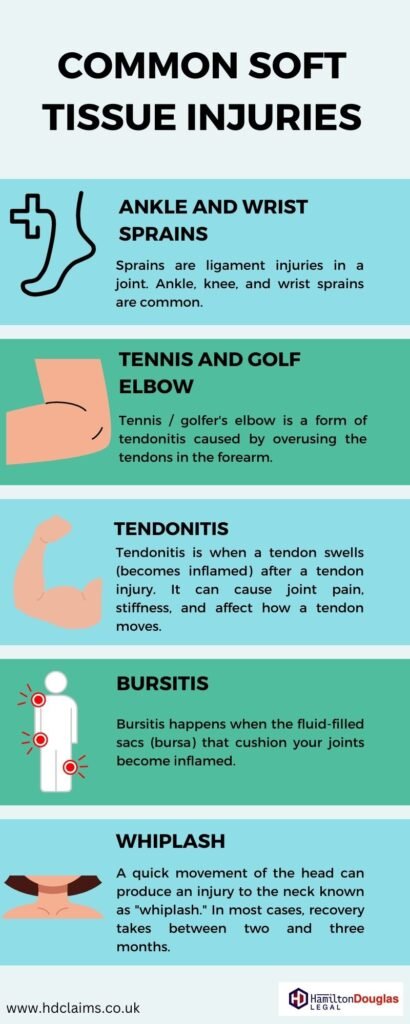
Soft Tissue Injury Compensation Calculator UK Contact Us Sarah John’s Legal Writer Soft tissue injury compensation calculators will help you estimate how much compensation you may be entitled to if you have been injured in the UK. To use a calculator, input your personal information, describe your injury, and enter the amount of money you’ve already spent on medical expenditures and loss of earnings due to your accident. The tool will then estimate how much compensation you might receive in serious injury claims. It is crucial to note that the calculator is only an estimate, and actually, how much compensation for soft tissue injury you receive will depend on the specific circumstances of your case. Read on to learn more about soft tissue injury compensation. Table of Contents Get In Touch With Your Local Office: With local knowledge and a national network of experts, we have the experience you can count on. Contact Us Relevant Topics: Road Traffic Accident Accidents In Public Accident at Work Medical Negligence Claims Serious Injury Claims Asbestos Claims Motorcycle Accident Claims Taxi Accident Claims Slip Trip And Fall Claims Compensation Calculator Whiplash Claims What Are The Causes Of Soft Tissue Injuries You can have soft tissue injuries due to various reasons. Accidents such as slips, trips, and falls are common causes, and they can strain or tear muscles, ligaments, and tendons. Vehicle accidents and other forms of trauma can result in soft tissue injuries due to the sudden impact on the body. These injuries can vary in severity; some might only take a week or two to recover, while others might take months or even years. You may ask, Can Soft Tissue Damage Be Permanent? The answer is yes; they can be permanent if you do not provide adequate treatment and care at the start. Soft Tissue Injury Compensation Calculator Edit Injury Notes Damages Multiple soft tissue injuries + special damages Serious soft-tissue injuries plus additional financial losses such as treatment costs, lost earnings, and paid care/support. Up to £150,000+ Back injuries Severe (iii): A back soft-tissue injury that develops into long-term/chronic problems, with ongoing disability despite treatment. £47,320 to £85,100. Back injuries Moderate (ii): A back soft-tissue injury that significantly worsens or speeds up an existing condition over a prolonged period. £15,260 to £33,880. Ankle injuries Very severe: A transmalleolar ankle fracture alongside substantial damage to surrounding soft tissues. £61,090 to £85,070. Neck injuries Severe (iii): Major neck soft-tissue damage, sometimes involving tendon rupture, with lasting/chronic symptoms. £55,500 to £68,330. Neck injuries Moderate (i): Combined soft-tissue injuries affecting both the neck and the back. £30,500 to £46,970. Hand injuries Moderate: Hand trauma, including crush-type injuries, penetrating injuries, and other soft-tissue damage. £6,910 to £16,200. Shoulder injuries Moderate: Shoulder soft-tissue injury with lasting, noticeable symptoms after two years. £9,630 to £15,580. Wrist injuries A wrist soft-tissue injury that takes longer than 12 months to recover. £7,420 to £12,630 Possible Causes Of Soft Tissue Injury: Soft tissue injuries can happen because of many different reasons in the UK; Some of the most common reasons are as follows. Workplace Accidents: Workplace accidents are a common cause of soft tissue injuries in the UK. These accidents can happen in a wide range of workplaces and businesses and affect people of all ages and jobs. One of the main reasons soft tissue injuries happen at work is how people lift and move heavy items. When employees don’t know how to lift or carry things correctly, it can put too much pressure on their muscles and cause them to strain or sprain. Another thing that can cause soft tissue injuries at work is repetitive tasks. Jobs involving doing the same thing over and over again, like typing on a computer or working on an assembly line, can lead to overuse injuries in the muscles and tendons. This can cause problems like carpal tunnel syndrome or arthritis over time. Slips, trips, and falls at work are common causes of soft tissue injuries. Wet or uneven floors, cluttered walks, or workspaces that aren’t looked after well can make someone more likely to fall and hurt their muscles, tendons, or ligaments. Due to the physical nature of some jobs and businesses, there is a higher risk of soft tissue injuries. Because of how hard their jobs are, construction workers, warehouse workers, healthcare workers, and manual labourers are more likely to get these kinds of injuries. If you have suffered a soft tissue injury in a workplace accident, then you may be eligible to make accident claims. However, if you want to make a claim, then take note of the time limits for making accident claims. The time limit in the UK is usually three years from the date of the accident. Sports Accidents: In the UK, sports accidents are also a common cause of soft tissue injuries. When people do sports or other physical activities, they might accidentally push themselves too hard or collide with other people. These things can cause their muscles and joints to get strained or sprained. There are many sports where crashes can happen, like football, rugby, tennis, and running. During these activities, sudden movements, falls, or impacts can put a lot of stress on the body’s soft tissues, which can lead to injuries. It’s important to warm up before physical activities and to wear the proper protection gear, like helmets or pads, to avoid soft tissue injuries from sports. If you get a soft-tissue injury while playing sports, you must stop immediately and allow the affected area to rest. Putting ice on and applying pressure can also help reduce the pain and swelling. If the injury is severe or doesn’t get better with treatment at home, see a doctor for an accurate diagnosis and treatment plan. Whiplash: Whiplash is a common injury in the UK that often happens in car crashes. It occurs when the head quickly jerks forward and backwards, putting stress on the muscles and ligaments in the neck. This sudden movement can hurt soft
What Is The Drink Drive Limit In Scotland?

What Is the Drink-Drive Limit in Scotland? Contact Us Sarah John’s Legal Writer Current Drink Drive Limit In Scotland: The maximum legal limit for driving in Scotland is 22 micrograms (mcg) of alcohol per 100 millilitres (ml) of breath or 50mg/100ml of blood. The Breath Limit: 22 microgrammes (mcg) of alcohol per 100 millilitres (ml) of breath The Blood Limit: 50 milligrams (mg) of alcohol per 100 millilitres of blood The Urine Limit: 67 milligrams of alcohol per 100 millilitres in urine. Drivers who exceed these limits can face serious repercussions, including disqualification from driving, fines, and even imprisonment. In addition, anyone injured due to an accident caused by someone over this legal limit may have grounds to make personal injury claims scotland against responsible parties. Table of Contents Get In Touch With Your Local Office: With local knowledge and a national network of experts, we have the experience you can count on. Contact Us Relevant Topics: Road Traffic Accident Accidents In Public Accident at Work Medical Negligence Claims Serious Injury Claims Asbestos Claims Motorcycle Accident Claims Taxi Accident Claims Slip Trip And Fall Claims Compensation Calculator Whiplash Claims How Much Can You Drink When Driving? In Scotland, the rules regarding alcohol and driving are clear and very strict. According to the legislation, the legal limit for alcohol Scotland is 50 milligrams of alcohol in every 100 millilitres of blood, 22 microgrammes (mcg) of alcohol in 100 ml of breath, or 67 milligrams (mg) in 100 ml of urine. To put it in context, this is lower than the rest of the United Kingdom. Nonetheless, even these specific numbers might not clearly show how much you can drink before driving. Numerous factors can affect how much alcohol you can consume before reaching the Limit, such as your weight, age, sex, and how quickly your body metabolises alcohol. You can get an estimate using a Scottish drink drive limit calculator. Remember, these figures are upper limits, not targets, as even small amounts of alcohol can impair your ability to drive. Therefore, the best and most professional advice we can offer is straightforward: If you plan to drive, don’t drink; If you drink, don’t drive. It’s always better to arrange for a designated driver, use a taxi, or utilise public transportation. For the sake of your safety, the safety of your passengers, and the safety of others on the road, the message is clear: Zero alcohol is the only sure way to avoid the risk of drunk driving. It’s also the only certain way to avoid potentially severe legal consequences. Free Claim Check Request A Callback Call: 0141 280 1112 What Happens If You’re Convicted Of Drink-Driving? If authorities convict you of drunk driving in Scotland, you will face serious penalties, reflecting the grave danger such behaviour poses to yourself and others on the road. Firstly, you will receive a criminal record, which can affect numerous aspects of your life, including your employment prospects and your ability to travel to certain countries. In terms of direct legal consequences, you will face an immediate driving ban. The length of this ban can vary; however, it will typically be for at least 12 months. The minimum ban extends to three years if you commit the offence more than once within ten years. A hefty fine also applies, potentially reaching up to £5,000. In extreme cases, you may even face imprisonment; this can be up to six months for a standard offence. However, the sentence can extend to 14 years for causing death by negligent driving when under the influence of alcohol. On top of these legal penalties, you will also face practical implications. Your car insurance costs are likely to increase significantly, and some insurers may refuse to cover you at all. Furthermore, after your ban, you may need to pass the extended driving test, a more rigorous version of the standard driving test, before you can get back on the road. The court decides this requirement on a case-by-case basis. Lastly, the social stigma associated with drunk driving can have a profound impact. The damage to your reputation in your local community can be extensive and long-lasting. Given these serious potential consequences, the message remains clear: don’t drink and drive. If you are injured or affected by a drink-driving accident, consulting personal injury solicitors Scotland may help you understand your rights and pursue appropriate compensation. What Are The Consequences Of Refusing A Breath Test Scotland? When stopped by police and asked to take a breath test, refusing can have serious legal repercussions. Refusing can be considered an offence and lead to immediate arrest regardless of your actual intoxication level. Depending on where they found you, police might require blood or urine samples from you so they can determine if you exceed the legal alcohol driving limit Scotland. Refusing without providing an acceptable explanation, such as medical reasons, can have severe repercussions – fines, license suspension, and jail time. Therefore, it is crucial that individuals recognise that refusing a breath test without providing valid reasons will be treated seriously by authorities; cooperation with police is always advised. What Are Scotland’s Drink-Drive Limits For Beer And Wine Ahead Of The Christmas Party Season As the Christmas party season approaches, knowing Scotland’s drink-drive limits for beer and wine is important. In Scotland, the amount of alcohol one can drink before driving depends on age, weight, and the type of alcohol consumed. It is illegal to drive with 22 micrograms of alcohol per 100 millilitres of breath or 50mg per 100ml in blood (it’s the drink drive limit). Although there is no specific figure for how much one can safely consume when out drinking, Scottish government guidelines advise against driving after consuming alcohol, including beer and wine, at all. The Law Around The Drink Drive Limit In The Rest Of The UK In England and Wales, it is illegal to drive a car if your blood alcohol level (BAC) is above 0.08% (or 80mg per 100ml
Average speed camera devices on the A9:

Average speed camera devices on the A9: Contact Us Sarah John’s Legal Writer The use of average speed camera (ASC) devices has been a critical element of road safety measures in Scotland. The longest road in Scotland, the A9, also uses average speed cameras to increase road safety and minimise the chances of road accidents. Let’s take a closer look at how average speed cameras work and what impact they can have on car accident claims in Scotland. Table of Contents Get In Touch With Your Local Office: With local knowledge and a national network of experts, we have the experience you can count on. Contact Us Relevant Topics: Road Traffic Accident Accidents In Public Accident at Work Medical Negligence Claims Serious Injury Claims Asbestos Claims Motorcycle Accident Claims Taxi Accident Claims Slip Trip And Fall Claims Compensation Calculator Whiplash Claims What is the Average speed of camera devices on the A9? The average speed cameras on the A9 do not have their own average speed. Instead, they measure the speed of vehicles passing by. These cameras monitor the speed of cars, trucks, and motorcycles to ensure they are not travelling too quickly. Here is how they work: A9 average speed cameras measure the speed at which a vehicle travels from one point on the road to another. They do not care about your speed when passing in front of a single camera. What they care about is your average speed between two cameras. The speed limit on A9 Scotland ranges from 30 to 70 mph; the cameras help enforce these rules. If you go faster than the speed limit between two cameras, you’ve gone too fast on average, which could result in a speeding ticket. What are the speed limits on the A9 road? The most dangerous road in Scotland, the A9, has different speed limits in various sections. It’s important to know these limits because they are strictly enforced, especially with average speed cameras and mobile speed cameras. Here are the general A9 Speed Limits 2023: Motorway Sections: Where the A9 is dual carriageway, the limit for cars and motorbikes is usually 70 mph unless signs show otherwise. The limit is usually 60 mph for buses, coaches, and goods vehicles that weigh more than 7.5 tonnes. For goods vehicles that weigh less than 7.5 tonnes, the limit is usually 70 mph. Dual Carriageways: The speed limit on the parts of the A9 that are dual carriageway sections is usually 70 mph for cars and motorbikes, 60 mph for vehicles up to 2 tonnes, and 50 mph for buses, coaches, and goods vehicles over 7.5 tonnes. Single-lane roads: The speed limit on single-carriageway sections of the A9 is usually 60 mph for cars and motorcycles, 50 mph for vans based on vehicles that weigh up to 2 tonnes, and 40 mph for buses, coaches, and goods trucks that weigh more than 7.5 tonnes. Rural places: The speed limit for cars and motorcycles can be up to 60 mph in most rural areas, where roads are often single or dual carriageways. It can be up to 50 mph for vehicles that weigh up to 2 tons, and it’s usually up to 40 mph for buses, coaches, and goods vehicles that weigh more than 7.5 tons. Again, always read the signs because the speed limit can differ on different road sections. Urban Areas: The speed limit is usually lower in cities with more pedestrians and cars. The standard speed limit is 30 mph, but it could be lowered to 20 mph in some residential areas or near schools. Built-up Areas: Built-up areas usually have a 30 mph speed limit. This often applies where there are regular street lights placed no more than 200 yards apart. Always check for signs, as some built-up zones may have a lower limit, such as 20 mph near schools or residential streets. Satisfied Clients 0 K+ Dedicated Experts 0 + Client Rating 0 Compensation Recovered £ 0 + Million Are average speed camera devices legally authorised for use on the A9 in Scotland? Yes, the average speed camera devices are legal to use on the A9 in Scotland. Scotland’s government and the police allow the use of these cameras. They want to ensure that everyone on the roads is safe, and these cameras play a significant role in achieving that goal. It’s like having a police officer with a speed gun all day and night. Not only in one spot but all along the road. When real police officers can’t be there, these cameras act as the eyes of the law. The law permits using these cameras because speeding and accidents are closely linked, and speeding is a major cause of car accidents. Driving too fast can cause accidents, which can result in serious injuries and even death. Nobody would want that; these cameras are essential because they help slow drivers down and decrease the number of speeding accidents. How do the A9 speed cameras work? The purpose of speed cameras on the A9 in Scotland is to encourage safe driving and avoid potentially fatal accidents. They use advanced technology to monitor how fast cars are going and ensure that everyone follows the traffic rules; this is how they work: Types of Cameras: There are different kinds of speed cameras, but average speed cameras are the most common on the A9. These cameras figure out the average speed of a vehicle over a certain distance rather than at a single point. Measuring Speed: The average speed camera systems on the A9 use Automatic Number Plate Recognition (ANPR) technology. This means that they take pictures of licence plates at different places along the road. Each camera keeps track of when a car drives by. The system then determines the average speed based on how long the car takes to get from one place to another. Images and Data Storage: If a car is going over the speed limit, the camera system will take more pictures and
How Much Compensation For Whiplash And Anxiety?

How Much Compensation For Whiplash And Anxiety? Contact Us Sarah John’s Legal Writer The same factors determine the compensation for whiplash and anxiety in Scotland as in other parts of the UK. These include the severity of the injuries, the impact on the individual’s quality of life, physical therapy costs, and the specific circumstances of the accident that caused the injuries. In the UK, compensation for whiplash and anxiety is typically awarded based on the Judicial College Guidelines, which provide a framework for calculating compensation amounts for personal injury claim. The guidelines consider the severity of the injury, the length of recovery time, and the impact on the individual’s quality of life. For whiplash injuries, the average compensation for whiplash can range from a few hundred pounds to several thousand pounds, depending on the severity of the injury and the impact on the individual’s life. The minimum payout for minor whiplash injuries in the UK, as per the Whiplash Reform Programme, is now capped, typically ranging between £1,750 and £2,200; payout for serious whiplash injuries can be much more. The whiplash payout scale UK 2026 also adjusts for more serious injuries that may fall outside of the cap. Compensation for anxiety can also vary widely, depending on the severity of the anxiety, the impact on the individual’s life, and the cause of the stress. It’s important to note that each case is unique, and compensation amounts are determined case-by-case basis. Suppose you have suffered from whiplash or anxiety due to an accident caused by someone else’s negligence. In that case, it’s recommended that you consult with a personal injury lawyer in Scotland to discuss your legal options and potential compensation. Table of Contents Get In Touch With Your Local Office: With local knowledge and a national network of experts, we have the experience you can count on. Contact Us Relevant Topics: Road Traffic Accident Accidents In Public Accident at Work Medical Negligence Claims Serious Injury Claims Asbestos Claims Motorcycle Accident Claims Taxi Accident Claims Slip Trip And Fall Claims Compensation Calculator Whiplash Claims How Much Compensation Can I Claim For Whiplash And Back Injury? Depending on how long your injuries last, whiplash compensation in the UK could range from £240 to £4,215. In June 2021, the Civil Liabilities Act modified the amounts. This regulation was introduced to reduce bogus claims, so the average whiplash payout is now much less than in past years. The amount of compensation for whiplash is influenced by factors like the severity of your injuries and the duration of your pain. Compensation for back injuries will depend upon how severe they are. Should a back injury be serious and include damage to the spinal cord requiring surgery and maybe cause partial paralysis or bladder control loss, the compensation might range from £34,000 to £141,150. Many times, these types of injuries require significant lifestyle changes, such as dealing with arthritis or trouble moving around. You could get between £10,970 and £34,000 for moderate back injuries. This may include spinal fractures that cause ongoing pain or a significant future risk of arthritis. Sometimes, like for a slipped disc or a spinal fusion, it also calls for surgery. If it’s a mild back injury—strains, sprains, soft tissue damage—compensation ranges between £2,150 to £10,970. These injuries typically heal within months to five years, depending on their severity. Whiplash Claim Amounts 2026: New Whiplash Compensation Claim Amounts Here is a chart of the new whiplash compensation claim amounts for 2026 in the UK: Edit Injury Type Severity level Notes Guideline Compensation Award Neck injury Moderate (ii) A soft-tissue or twisting neck strain, sometimes involving a severe disc injury that can lead to cervical spondylosis. £16,770 to £30,500 Back injury Moderate (ii) Muscle/ligament disruption causing ongoing back pain, but not at the most serious level. £15,260 to £33,880 Multiple severe injuries + special damages Very severe May involve major life impact such as reduced ability to work, loss of earnings, and the need for paid care/support. Up to £150,000+ Neck injury Severe (iii) Significant soft-tissue damage and/or torn tendons, leading to long-term symptoms and a significant lasting disability. £55,500 to £68,330 Back injury Severe (iii) Serious soft-tissue back injuries that can develop into chronic, long-term conditions. £47,320 to £85,100 Neck injury Moderate (i) A serious soft-tissue injury affecting the neck and also impacting the back. £30,500 to £46,970 Whiplash One or multiple whiplash injuries plus one or more minor psychological injuries Ongoing symptoms lasting around 15–18 months. £3,700 Shoulder injury Moderate Soft-tissue shoulder damage with noticeable symptoms that last longer than a minor shoulder injury, but aren’t permanent, and may continue for up to about 2 years. £9,630 to £15,580 Shoulder injury Serious A dislocated shoulder with lower brachial plexus nerve involvement, often causing pain affecting the shoulder and neck. £15,580 to £23,430 Whiplash Whiplash injury (single or multiple) with minor psychological effects Symptoms continue for approximately 18–24 months. £4,345 It is important to note that these compensation amounts are only a general guideline and may vary depending on the specific circumstances of the case. Other factors, such as the severity and duration of the injury, the impact on the person’s daily life and well-being, and any associated costs, will also be considered in determining the compensation amount. If you want to know more about compensation amounts for whiplash with back pain or physiotherapy, check out our guides on how much compensation for whiplash and back pain or how much compensation for whiplash with physiotherapy. It is recommended to consult with an experienced personal injury lawyer who can help you navigate the claims process and negotiate with insurance companies on your behalf. How Much Compensation Can I Claim For Severe Whiplash? If you have had severe whiplash, you may be entitled to substantial compensation. In the UK, compensation for severe whiplash with persistent symptoms and probable spine damage may be up to £97,500. This kind of injury typically causes long-term pain, reduced mobility, and a severe impact on everyday activities. What
What Happens If A Cyclist Hits My Car UK?

What Happens If A Cyclist Hits My Car UK? Contact Us Sarah John’s Legal Writer In the UK, the circumstances surrounding a bike colliding with your vehicle are not always straightforward. Cyclists are vulnerable on the road; nevertheless, this does not inherently mean that the driver is at fault. At times, the cyclist may bear responsibility, or road circumstances may contribute to the situation. When this happens, it’s important to assess the situation, especially if there’s no obvious negligence. Depending on the evidence, legal action may be taken, and you may need to report the accident to the police. Knowing your rights, including compensation, is key in these cases. Table of Contents Get In Touch With Your Local Office: With local knowledge and a national network of experts, we have the experience you can count on. Contact Us Relevant Topics: Road Traffic Accident Accidents In Public Accident at Work Medical Negligence Claims Serious Injury Claims Asbestos Claims Motorcycle Accident Claims Taxi Accident Claims Slip Trip And Fall Claims Compensation Calculator Whiplash Claims What To Do If A Cyclist Hits Your Car Uk? First, ascertain the safety of all individuals involved if a bicycle collides with your vehicle. If someone is injured, immediately contact emergency services. Obtain the contact information of the cyclist if they possess insurance. If not, ensure you record their name and address. Then, you must get photos and videos of the scene. If you have to sue, note the damage, injuries and the surrounding area to help your case. If you haven’t already told the police about the accident, do so within 24 hours to make sure everything is correctly recorded. Key Steps to Take After Cyclist Hits Your Car If a cyclist collides with your car, the first thing you should do is check for injuries. If the cyclist is injured, call for an ambulance immediately. Next, document the scene by taking clear photos of the damage to your car and bicycle. This will help with insurance claims and legal issues. Don’t forget to exchange contact information with the rider, including their insurance information, if any. This is critical for resolving the situation and ensuring you have accurate information for any Road Traffic Accident Claims. Who Pays if a Cyclist Hits a Car in the Uk? Who pays compensation if a cyclist hits a car? Determining liability for damages in claims involving cyclists, especially when a cyclist collides with your vehicle in the UK, can be complex. If the cyclist is culpable, you may be able to pursue a claim against them. If they possess insurance, the process is simplified—merely reach out to their insurer. If not, you will probably have to use your own insurance or even take legal action. To protect yourself, make sure to document the scene, report the accident to the police and get details about the cyclist. This will help when it’s time to claim or work out who’s to blame. What Happens If a Child Cyclist Damages a Car in the UK? If a young Cyclist destroys your car in the United Kingdom, taking legal action can be difficult. However, you should still notify the police so that they can make a report. It’s also a good idea to ask your house insurance provider if your policy covers damage caused by cyclists. Many insurers provide this type of coverage, so knowing your options before taking any further action might make navigating the situation easier. Satisfied Clients 0 K+ Dedicated Experts 0 + Client Rating 0 Compensation Recovered £ 0 + Million Who Is Financially Responsible After a Collision? If there is sufficient evidence that the cyclist’s negligence caused the accident, you may be entitled to sue them in small claims court. However, before going to court, you should grasp all of your options. Speaking with Personal Injury Solicitors can help you look into additional options for claiming compensation. If taking the cyclist to court appears to be the best option, talking with a lawyer will increase your chances of proving negligence and winning your case. Prioritising Safety Immediately After the Accident The first priority after a cyclist impacts your car is to ensure everyone’s safety. If the collision is blocking the road and it is safe to do so, move your vehicle to a safer location. Don’t forget to activate your hazard lights to alert other cars. This helps to prevent future mishaps and keeps the situation as safe as possible while you take the next steps, such as asking for help and documenting the scene. DEDICATED CLAIMS ADVISORS Our dedicated claims advisors are always available to offer free legal advice. 100% NO WIN NO FEE CLAIMS All our claims are processed on a No Win No Fee basis; you pay nothing if you lose. MILLIONS SECURED IN DAMAGES To date, we have secured millions in damages. THOUSANDS OF SATISFIED CLIENTS To date, we have helped thousands of clients recover compensation and continue to do so. Assess Injuries and Vehicle Damage Checking for Injuries to the Cyclist Involved After a cyclist hits your car, always check if they’re injured, even if they say they’re fine. Some injuries, like concussions, won’t show up immediately. It’s a good idea to encourage them to get medical attention to make sure they’re okay, even if they don’t seem hurt at first. Inspecting Your Car for Damage Post-Collision After a cyclist hits your car, check for damage. Take photos and videos of the affected areas. This will be important for insurance claims, especially if you’re not at fault. The more evidence you have, the smoother the process will be when dealing with your insurer. Legal Requirements for Reporting a Cyclist-Car Accident In the uk, you are legally required to report certain road accidents to the police if someone is injured or there’s significant property damage. Even if the accident seems minor, it’s a good idea to report it. This will make sure you’re following the law and will protect you if the situation escalates later.
Side-impact Collision Who’s At Fault UK?

Side-Impact Collision Who’s At Fault UK? Contact Us Sarah John’s Legal Writer Side Impact Collision – Understanding Fault In The UK When the front of one car hits the side of another, it’s called a “T-bone” crash. They’re common at junctions, roundabouts, and car-park exits, especially when a driver misreads priority or rushes a light. At medium to high speeds, there’s little time to brake, so the impact can be sudden and severe. Working out the fault in the UK isn’t automatic. Liability depends on the right of way and whether either driver failed to take reasonable care. Answering what happens when a car hits you from the side means looking beyond dents to causes (speed, distraction, drink or drugs, road and weather) and gathering solid evidence: statements, photos, dashcam clips, damage patterns, and any police report. This guide starts with the basics so you can approach side impact collision claims with clarity and confidence. Table of Contents Get In Touch With Your Local Office: With local knowledge and a national network of experts, we have the experience you can count on. Contact Us Relevant Topics: Road Traffic Accident Accidents In Public Accident at Work Medical Negligence Claims Serious Injury Claims Asbestos Claims Motorcycle Accident Claims Taxi Accident Claims Slip Trip And Fall Claims Compensation Calculator Whiplash Claims Defining A Side Impact Collision And How It Happens A side-impact crash happens when one vehicle strikes another along the door panels, or when both vehicles meet flank-to-flank rather than bumper-to-bumper. You see such accidents on A-roads, motorways, junctions, during left or right turns, and in car parks. In short, it’s a side on collision where the side takes the force. How do they happen? A driver pulls out from a smaller road without giving way; a car turns across traffic; someone reverses or merges in a lane without checking mirrors. At urban and motorway speeds, reaction windows shrink, so even a brief glance away can be enough to miss something. Limited crumple zones along doors mean lateral hits bite harder. However, not every case stems from recklessness: fog, standing water, glare, or a sudden mechanical fault can all lead to an accident. Typical Causes Behind Side Impact Accidents Understanding how a side on car collision happens is the first step to working out fault in the UK. These crashes often begin with small errors that cascade into serious collisions. Mapping the cause helps insurers and courts decide who is at fault for a side impact accident. Speeding And Risky Driving Higher speeds make stopping distances longer and decision time shorter. Even if a driver spots an obstacle, there may be no time to brake or avoid. The lateral hit then carries more energy, which raises the risk of serious injury and extensive damage. Distraction At The Wheel Phones, sat-nav inputs, spilled coffee, or even lively conversations can draw a driver’s attention away from the road. This can result in missing red lights, failing to stop at a stop sign, or creeping out from a side road without checking to see if the coast is clear. Drivers reversing or pulling from bays may also fail to spot vehicles coming through. Driving Under The Influence Alcohol, drugs, and some medicines blur judgment and slow reactions. A drifting lane position or poor distance estimation can place a car in the path of crossing traffic. The result is a direct hit on doors where protection is thinner. Tailgating And Following Distance Following close leaves little time to respond when traffic slows or swerves. If the car ahead of you swerves suddenly to avoid something in the road (like a tire or a piece of wood), and you’re following too closely, you won’t have time to react. Keeping a generous time gap and adding more in rain or fog reduces these chain reactions. Road And Vehicle Factors In many loss of control scenarios, hazards such as potholes, standing water, glare, or hidden sight lines near junctions can cause a driver to lose grip or visibility in seconds, leading to accidents. Mechanical faults like brake failure or steering issues shift attention to maintenance and manufacturer responsibility. These conditions complicate the process of determining who is at fault, but they do not erase the duty to drive with care. Why Causes Matter For Fault The cause of the crash guides the type of evidence you need to collect. Photos, dashcam clips, telematics, witness details, and damage patterns help reconstruct who had the right of way and who was at fault. Clear notes taken at the scene make the side car collision claims process faster, fairer, and far less stressful. Fault In Right-Turn Side Impact Collisions Right-turn side impacts often occur when a driver crosses oncoming traffic and misjudges the gap. In the UK, the turning driver must give way to vehicles coming straight through. If that duty is ignored, fault commonly sits with the turner. Fault is not always one-sided. If the oncoming driver was speeding, jumped a light, or drove without due care, responsibility can be shared. To answer Side impact collision who’s at fault UK, gather evidence fast: signal use, light phases, dashcam or CCTV, skid marks, damage angles, and witness details. Satisfied Clients 0 K+ Dedicated Experts 0 + Client Rating 0 Compensation Recovered £ 0 + Million How Fault Is Determined In Side Impact Cases Begin With Safety And A Clear Head Secure the scene, check for injuries, and call for help. Once things are stable, note what happened while it is fresh in your mind. In the UK, decisions rest on evidence, not guesswork. What Decides Fault Establishing fault is crucial because it directly affects liability and payment for vehicle repairs, medical expenses, and any injury compensation. Investigators look first at priority and reasonable care. Who had the right of way, who looked properly, and who managed their speed? Everything else supports that picture. What The Damage Shows Damage patterns help reconstruct the sequence of events. A strike to the driver’s side
Can I Cancel A Car Accident Claim After Filing?

Can I Cancel A Car Accident Claim After Filing? Contact Us Sarah John’s Legal Writer Yes, you can. However, before you cancel, you must first notify your insurance company and any no win no fee personal injury solicitors you may have hired. This notice should ideally be in writing so that there is a clear record of your intent and the date of the decision. If you cancel a claim, you may be unable to reinstate it or reopen the claim later, especially if the termination was due to a mutual agreement. So, it’s always best to be absolutely sure before making such an important decision. Even though you cancelled your claim, the fact that you made a claim might still show up on your insurance background. Even though you aren’t at fault, future insurers might consider this when determining your premiums or evaluating your risk. Also, you might have to pay any costs that come up until you cancel. For example, if your lawyer has already started working on your RTA compensation claim or the insurance company has done an assessment, you might have to pay for these costs. Lastly, if you decide to cancel, you may need to talk to the other parties involved in the car accident to ensure everyone is on the same page and avoid mistakes or misunderstandings in the future. Car accidents are an unfortunate reality; they can happen to anyone at any time. Even after applying various road safety rules, such road traffic accidents still happen. Anyone involved in an accident that was not their fault is eligible to make Car Accident Claims. However, what if you have already made a car accident claim but now want to cancel it? This article will explain how to cancel a car accident claim in simple terms. Can You Cancel a Car Insurance Claim? Yes, you can cancel a car insurance claim, but it depends on the company and how far the claim has gone. If no payment has been made and no other person is involved, your insurance company may let you withdraw it. Many people cancel when the damage is minor or when they made the claim by mistake. Table of Contents Get In Touch With Your Local Office: With local knowledge and a national network of experts, we have the experience you can count on. Contact Us Relevant Topics: Road Traffic Accident Accidents In Public Accident at Work Medical Negligence Claims Serious Injury Claims Asbestos Claims Motorcycle Accident Claims Taxi Accident Claims Slip Trip And Fall Claims Compensation Calculator Whiplash Claims How To Cancel My Car Accident Claim Car accidents are unfortunate events that no one wishes to encounter. If you’ve found yourself in such a predicament in Scotland and have made a claim but now wish to cancel it, here is how to do it. 1. Introduction to the Claim Process: Here is how to claim after a car accident in Scotland: The Starting Point: After an accident, the first thing to do is check for damage and possible injuries. Always make sure everyone is safe and, if needed, get medical attention immediately. Notification: The next important step is informing the insurance company about the accident, as this starts the insurance process. This notice should be sent as soon as possible, usually within the time limit the insurance policy sets. Information Gathering: Gathering as much information as possible at the scene of an accident is essential. This includes information about the other car or vehicles, any witnesses, and pictures of the damage. For example, collecting information from all four directions would be vital if an accident happened at a crossroads. Making a claim: Once all the required information has been gathered, the car insurance claim process can start. Most of the time, this means filling out forms that the insurance company gives you. These forms will have information about the accident, the damage, the injuries, and anything else necessary. Assessment: The insurance company will conduct a car insurance claim check after you send it in. An assessor or adjuster might come to look at the damage to the car or to check on any injuries claimed. From this, the company will figure out the amount of compensation you should get. Resolution: Once the review is over, the insurance company will notify you of their decision. Depending on the insurance details, the compensation may cover repair costs, medical bills, or other types of damage. The time it takes to settle can vary based on the complexity of the claim and the responsiveness of all parties involved. 2. The Right to Cancel: In Scotland, individuals retain the right to cancel or withdraw their claim after initiating a car accident claim. This right ensures that they aren’t bound to proceed if circumstances change or if they reconsider their decision. However, it’s essential to understand that this decision of cancelling an insurance claim isn’t without potential consequences. Upon deciding to cancel, the first step is to communicate this intention to the relevant insurance company. This communication is preferably done in writing to ensure a proper record is kept. If the claimant had engaged a personal injury solicitor to manage the claim, they should also be informed promptly. While it’s possible to cancel a claim, there might be costs involved, especially if the work related to claim assessment has already started. For instance, the claimant might bear the costs if investigations were underway or if a solicitor has already started working. 3. How To Cancel A Car Insurance Claim: Contact your insurance company and inform them of your decision to cancel the claim. When you do this, communicate in writing, either through a letter or an email. This provides a record of your decision and the date you made it. Alongside contacting your insurance provider, if you’ve hired a solicitor to help with your claim, it’s also wise to notify them. They can guide you on any legal implications and help manage the process with the insurance company. While
Can You Get Legal Aid For Medical Negligence?

Can You Get Legal Aid For Medical Negligence? Contact Us Sarah John’s Legal Writer Medical negligence legal aid is still available in Scotland, but only for certain types of cases and only if you meet strict financial criteria. Because of this, many people pay for a medical negligence claim using a no win no fee agreement or legal expenses insurance instead. If you are eligible for medical negligence legal aid and your claim is unsuccessful, legal aid will usually cover your solicitor’s fees, allowing you to avoid paying for the legal work. Table of Contents Get In Touch With Your Local Office: With local knowledge and a national network of experts, we have the experience you can count on. Contact Us Relevant Topics: Road Traffic Accident Accidents In Public Accident at Work Medical Negligence Claims Serious Injury Claims Asbestos Claims Motorcycle Accident Claims Taxi Accident Claims Slip Trip And Fall Claims Compensation Calculator Whiplash Claims What Is Legal Aid? Legal aid in Scotland is public funding that assists people in paying for specific legal cases when they cannot afford to hire a solicitor on their own. When we talk about legal aid medical negligence, we mean assistance in cases where treatment fell below a reasonable standard and resulted in preventable harm. It can cover legal advice, help with negotiation, and representation in court, and it is usually means-tested. Because clinical negligence claims are complex and legal costs can be high, the rules about which cases qualify for legal aid are very strict. What Is The Process For Claiming Legal Aid? Applying for legal aid in Scotland involves several steps, and they are as follows: 1. Understanding Legal Aid In Scotland Legal aid in Scotland is a vital resource that can help people who need to make a claim but may not have the money to do so. The Scottish Legal Aid Board is in charge of this system, which helps those in need to pay for their legal representation. This ensures that everyone has fair access to justice, regardless of their financial situation. Definition And Purpose Of Legal Aid: Legal aid is publicly-funded assistance that pays for legal advice, mediation, and representation in court or panel. Legal aid aims to ensure that no one is denied access to justice because they can’t afford it. It’s a way to make sure that everyone, rich or poor, has a chance to have their case heard. Eligibility Criteria For Legal Aid In Medical Negligence Cases: In medical negligence cases, the Scottish Legal Aid Board needs to be sure that the claim has a good chance of success. They also look at how much money the individual has. To get legal aid funding, the person making the claim must pass a test to see if they can pay for it on their own. This evaluation takes income, savings, and other assets into account. It’s a means-tested system meant to help those who need it the most. Regarding the case itself, the claim must have a certain seriousness and complexity to be eligible for legal aid. This is often the case with medical negligence, given the technical and legal complexities involved. You should speak with your solicitor to discuss your eligibility for legal aid; they will help you determine whether you qualify and, if you do, help you complete the application. 2. Initiating The Legal Aid Application You’ll need to follow a sequence of steps to apply for legal aid in Scotland. The first step is to find a lawyer who can take on cases for legal aid. Once you’ve found a good lawyer, they can help you through the application process and ensure all the necessary paperwork is complete and submitted correctly. Engaging With A Law Firm: To apply for legal aid, you must work with a law firm registered with the Scottish Legal Aid Board. These companies have the knowledge and permission to help you through the process of getting legal aid. They can judge how strong your case is, help you complete the forms, and represent you if your application is accepted. Free Initial Consultation: In Scotland, many law firms offer a free initial consultation. This is your chance to discuss your case with a lawyer and the possibility of getting legal aid. They can give you some basic advice and help you determine what to do next. This consultation is usually free, so it’s a great way to explore your options without spending money. Even if you aren’t sure if you qualify for legal aid, a free Initial consultation can help clarify the situation. 3. Preparing The Legal Aid Application Preparing your application for legal aid requires careful attention to detail. Usually, your lawyer will help you through this process and ensure that your application is as strong as possible. Key parts of this preparation are getting evidence to back up your claim and completing the legal aid application form correctly and comprehensively. Gathering Evidence: Collecting evidence is an integral part of preparing to apply for legal aid. For a claim of medical negligence, this could mean getting medical records, reports from specialists, or comments from witnesses. This proof is very important for showing that your clinical negligence claim has a good chance of success. A lawyer can tell you what kind of proof to gather, which will help you build a strong case that meets the Scottish Legal Aid Board standards. Completing The Legal Aid Application Form: The application form for legal aid is a key document that needs to be completed. It asks for information about your finances and the case itself; it’s important to be accurate and honest here. Any mistakes or missing information could make your application take longer or even result in rejection. Your lawyer can help you complete this form, ensuring it is completed correctly and has all the necessary information. 4. Submitting The Legal Aid Application Once the application for legal aid has been completed and all the necessary evidence has been gathered,
How To Prove Medical Negligence Case?

How To Prove Medical Negligence Case? Contact Us Sarah John’s Legal Writer Most people ask how do you prove medical negligence when something has gone wrong with their medical care in Scotland. In simple terms, you must show that a doctor or other professional fell below a reasonable standard and that you suffered avoidable harm because of that. That sounds simple, yet the reality is often complex and tiring, especially if the clinician or NHS body does not accept liability. In Medical Negligence Claims Scotland, the law looks for clear evidence. In Scotland, if a medical negligence case goes to court, it is decided by a judge rather than a jury. Instead of being certain beyond a reasonable doubt, the judge only needs to believe that, according to the evidence, the negligence occurred more likely than not. Many claims are resolved through negotiation prior to a hearing. To succeed, you must present strong evidence that demonstrates both what went wrong and how it caused harm. Understanding and organising this information can be difficult on your own, but a specialist Scottish solicitor can help gather expert reports, explain each step, and guide you through the full claim process with care. This guide explains practical steps so you can understand what evidence to collect and who can help. It tells you what kinds of proof you need to gather and how that proof fits into the standard used by Scottish courts. You will also learn how lawyers decide how strong and valuable a claim is, which will help you move forward with a clear understanding of the process. Table of Contents Get In Touch With Your Local Office: With local knowledge and a national network of experts, we have the experience you can count on. Contact Us Relevant Topics: Road Traffic Accident Accidents In Public Accident at Work Medical Negligence Claims Serious Injury Claims Asbestos Claims Motorcycle Accident Claims Taxi Accident Claims Slip Trip And Fall Claims Compensation Calculator Whiplash Claims 1. Gathering Evidence And Medical Records Begin by requesting full records from all clinics and hospitals involved in your medical treatment in Scotland. Maintain a simple timeline that includes dates, symptoms, advice given, and any changes to your health. Save all letters, test results, prescriptions, and referral notes. Photographs and short videos can demonstrate how symptoms appeared at specific times. Keep copies of texts and emails you send to your doctor or hospital staff. Family or friends who saw your condition change can give clear witness statements. Good organisation makes proving a medical negligence case easier. Store documents in one folder, label files with dates, and back them up. A Scottish solicitor can then review everything quickly and request any missing records. 2. Proving The Breach Of Duty Proving a breach of duty begins with clear evidence that a healthcare professional fell below a reasonable standard of care. In Scotland, your solicitor will request your complete medical records from all clinics and hospitals that treated you. These records contribute to a comprehensive understanding of what happened and when it happened. Record your own timeline as well. Write a diary during treatment, and save messages, appointment letters, and test results. Photos and short videos of symptoms can also be used to demonstrate the long-term effects of negligent treatment. Witness accounts matter, especially from family or friends who saw your condition change. Your solicitor will take statements in a careful way, so that details are accurate and dates are clear. Small pieces of information can add up to a strong account. A lawyer reviews the evidence, but they do not decide if there was a breach of duty. That question goes to an independent medical expert with the right specialty. Their opinion explains what a competent professional should have done and where the standard was missed. The expert report connects the records, the timeline, and the witness evidence to accepted clinical practice. It shows whether the healthcare professional fell short in assessment, treatment, referral, or follow-up. This is the foundation for proving medical negligence uk in a Scottish claim. After the breach is identified, attention turns to proving causation, which asks whether the breach led to your injury or loss. Your solicitor will coordinate further expert input to connect the mistake to the harm. 3. Opinions From Independent Medical Experts Independent medical experts play a key role when you make a claim for medical negligence in Scotland. Your medical records will be reviewed by these experts, who will then tell you if the care you received was up to par. Their opinions assist the court or insurers in determining whether the harm you suffered could have been avoided. The expert is typically a professional working in the same field as the person who treated you. Their report explains how to prove hospital negligence by comparing your treatment to accepted medical practice. A skilled solicitor will assist you in finding the right expert and guiding you through the process, ensuring that your case is supported by strong and clear medical evidence. 4. Records Of Expenses Keep detailed records of all costs associated with the mistake and your recovery. Save receipts for travel, parking, prescriptions, therapy, care support, and any equipment you purchased. Take note of the date, purpose, and amount so that your solicitor can connect each item to your treatment. If your work has been affected, keep clear proof of any time off or reduced income. Save payslips, tax forms, and letters from your employer that show changes in your hours, sick pay, or salary. This information makes it easier to demonstrate the impact of your loss of earnings. Keep everything organised in one place, such as a folder or spreadsheet, and label each record with dates and details. Make a backup copy so nothing is lost. Strong evidence of your financial loss helps your solicitor understand your situation fully and determine how much compensation you deserve in Scotland. 5. Witness Statements Witness statements can add valuable information to your case. They